
At its foundation, the purpose of interior design is to improve how people live and work inside an indoor environment by shaping its physical structure, airflow, lighting, and usability. It turns raw square footage into an efficient, safe, and comfortable setting that meets daily human needs.
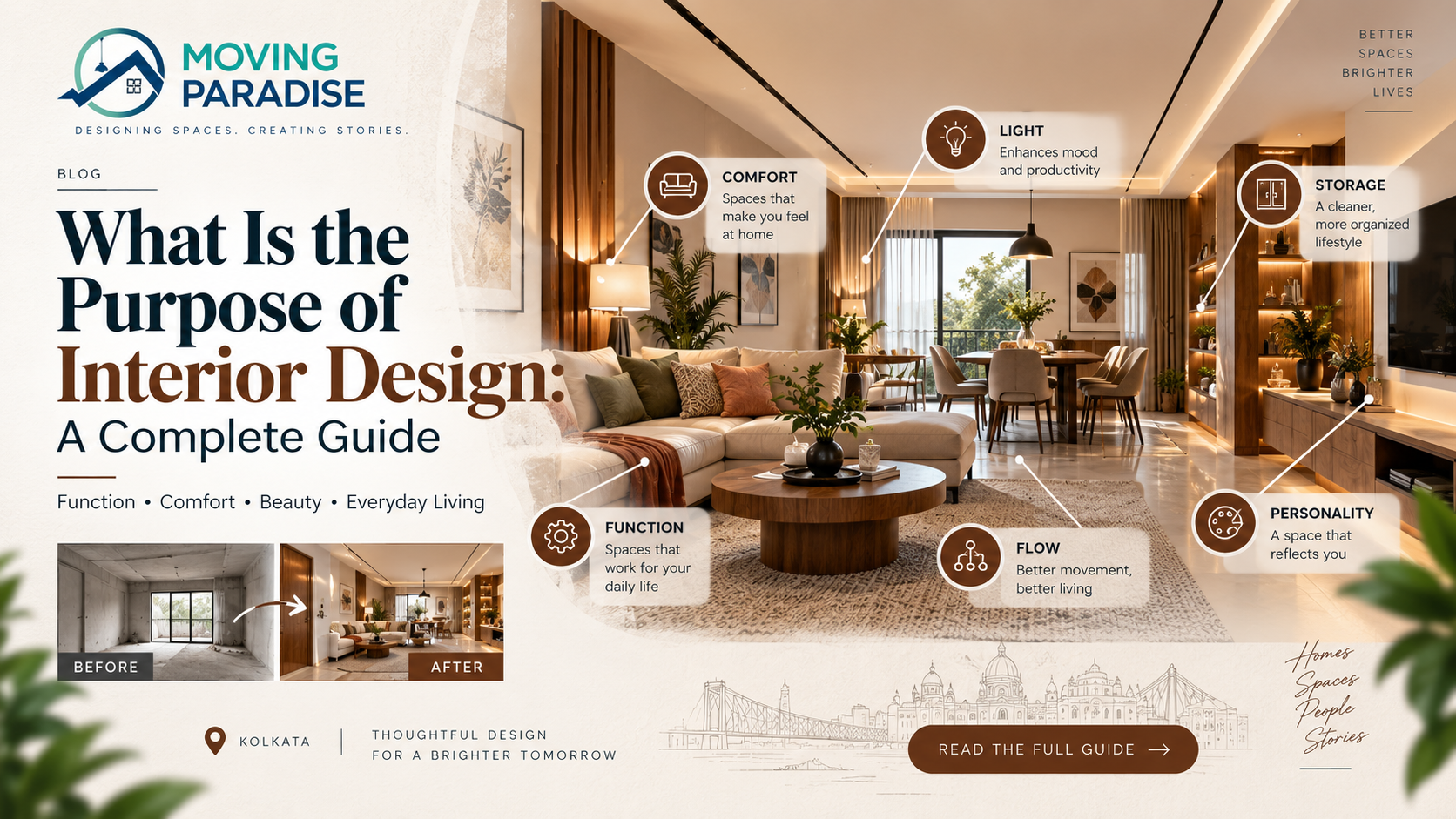
Defining the Core Purpose of Interior Design
Interior design solves practical layout problems while supporting human well-being. It goes far beyond surface-level decoration. A professional designer analyzes how a room functions, reviews building codes, and plans how furniture, walls, and equipment interact with the people using them.
Good design helps you move easily, work without physical strain, and rest without unnecessary distraction. It also balances safety requirements with structural limits. While a simple coat of paint changes the look of a room, interior design changes how that room operates.
How Spatial Layout Influences Human Behavior
The arrangement of physical objects alters how you feel, how fast you walk, and how long you stay in a room. When an interior uses clear boundaries and open paths, stress drops because the brain quickly maps out the room.
Optimizing Flow and Movement
A well-planned space lets people move naturally between entryways, seats, and work surfaces without squeezing past furniture. The standard walkway requires a minimum width of 36 inches so two people can pass each other comfortably, though tighter residential spots can drop to 30 inches if space is limited.
If a room has high foot traffic, leave at least 48 inches of open floor between kitchen counters and islands.; if the area is a private desk nook, 32 inches is sufficient to pull out an office chair. A frequent mistake is buying an oversized sectional sofa for a small living room, which costs homeowners hundreds of dollars in restocking fees when it blocks heating vents and doorways.
Creating Zones for Specific Activities
Dividing an open layout into clear zones helps the brain switch tasks smoothly. Large open plans often create noise spillover and visual chaos, making it hard to focus on complex jobs.
Zone Type | Primary Function | Minimum Clearance Required | Key Design Elements |
|---|---|---|---|
Focus Zone | Solo work, reading, quiet study | 36 inches behind desk | Task lamp, acoustic paneling, storage |
Social Zone | Dining, group conversation | 48 inches around table edges | Central pendant light, wide seating |
Transition Zone | Entryway, hallway, movement | 36 to 42 inches wide path | Durable rugs, wall hooks, floor runner |
The Psychological Impact of Color and Light
Lighting levels and surface hues directly change human mood and alertness. Natural daylight sets the body’s internal clock, which regulates hormone production, focus, and nighttime sleep cycles. In rooms with little sunlight, electric fixtures must take over this job by changing color temperatures across the day. Cool white lights around 4000K boost daytime concentration, while warm lights near 2700K help muscles relax in the evening.
Paint choices carry measurable emotional effects. Soft blues and muted greens calm visual tension because they reflect wavelengths that human eyes process with minimal strain. Saturated reds raise heart rates and create urgency. Designers evaluate lighting choices through guidelines established by the U.S. General Services Administration, which details how visual comfort affects daily worker efficiency.
Balancing Aesthetics with Functional Utility
A room that looks stunning on camera but fails during daily chores is an expensive failure. Functional design means chairs support healthy posture, kitchen counters sit at comfortable heights, and storage hides clutter before it piles up.
Every visual choice carries a functional trade-off: a glossy marble tabletop looks luxurious, but it scratches easily and stains when exposed to acidic foods like lemon juice or coffee. In contrast, matte quartz handles heavy abuse but lacks the natural veining of real stone.
If you want durability over visual prestige, select commercial-grade synthetic fabrics; if you want historic charm, pick untreated wood and accept regular oiling and surface dents.
The Role of Sustainability and Material Selection
Modern interior design protects the health of the planet and the people breathing indoor air. Many paints, adhesives, and particleboards release volatile organic compounds (VOCs) that irritate lungs and cause long-term headaches. Designers specify products certified under low-emission standards to keep indoor air clean. The U.S. Environmental Protection Agency provides clear guidance on how these chemicals collect in sealed rooms and how proper ventilation removes them.
Choosing sustainable materials also lowers energy consumption. Heavy linen drapes block winter drafts and summer heat gain, taking stress off heating units. This performance varies by fabric weight and window orientation—check the manufacturer’s thermal backing label before buying. Furthermore, designers follow accessibility and safety measures detailed in the ADA Standards for Accessible Design to ensure doors, switches, and countertops work for people of all physical capabilities.
Frequently Asked Questions
What is the difference between interior design and interior decorating?
Interior design involves spatial planning, architectural changes, building code compliance, and mechanical layouts. Decorating focuses strictly on the surface aesthetics of an existing room, such as choosing paint swatches, window draperies, throw pillows, and decorative accessories.
How does interior design affect property value?
Interior design raises property value by correcting awkward room layouts, modernizing kitchen workflow, and improving built-in storage. Homes with functional, code-compliant updates sell faster because buyers don’t need to spend extra money tearing down poorly placed walls or rewiring dark rooms.
Can interior design improve mental health in a workspace?
Yes, interior design improves mental health by reducing ambient noise, bringing in natural light, and setting up ergonomic workstations. Lower background noise reduces daily mental fatigue, while well-placed plants and clear sightlines lower stress hormones during demanding work hours.
What are the most important principles of universal design?
Universal design focuses on seven principles: equitable use, flexibility in use, simple and intuitive operation, perceptible information, tolerance for error, low physical effort, and appropriate size and space for approach. Together, these rules ensure that an environment stays fully usable for children, aging adults, and individuals with disabilities without requiring separate adaptations.
Final Thoughts
Ultimately, your home shouldn’t just look good; it should support your well-being every single day. By focusing on how you truly move through your space, you’ll create a sanctuary that feels uniquely yours. Don’t wait to start—pick one small room today and see how a few thoughtful changes can lift your spirits.