
Freelancers, small design studios, carpenter-led teams, and online platforms are the four main kinds of low budget interior designers in Kolkata. They all plan rooms, pick materials, and arrange work inside a tight spending limit. The single thing that separates them is who actually holds your money while the site runs. You’ll find these options across the city’s flats, from Salt Lake to Behala, each fitting a different kind of project.
Types of affordable interior designers in Kolkata
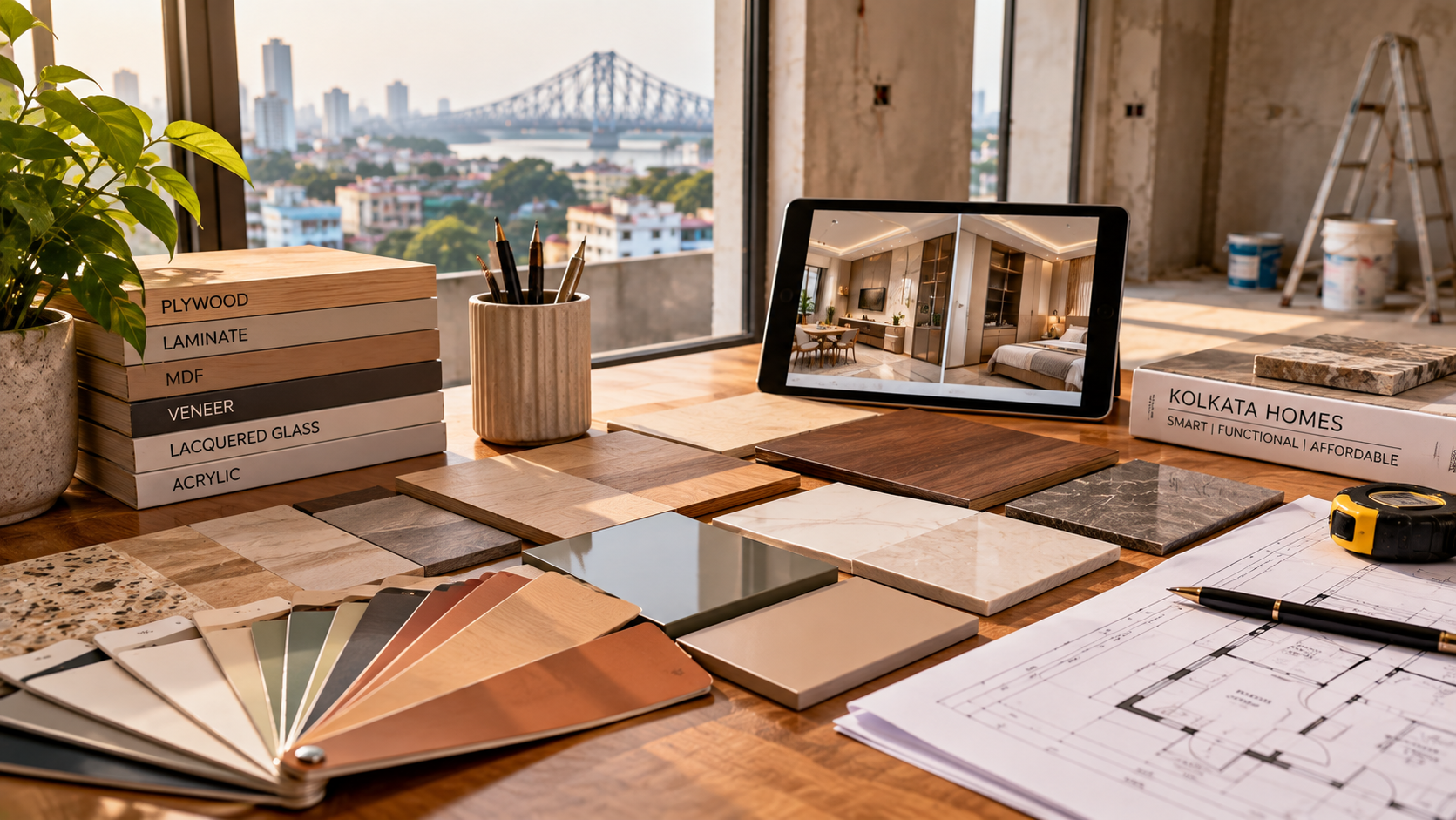
These five paths cover almost every room makeover you can hire out without overspending. Each one handles planning, buying, or building differently, so the right pick depends on what you need done. Check their portfolios before you agree to anything.
Type | Best for | Real example |
|---|---|---|
Freelance designers | Single rooms | Independent planner on LinkedIn |
Small studios | Full apartments | Local two-person firm |
Carpenter-led teams | Custom woodwork | Workshop owner with helpers |
Online platforms | Guided DIY projects | Livspace basic package |
Student collectives | Concept layouts | Design school final-year group |
Freelance interior designers
A freelance designer works alone, charging per room or per hour instead of taking a cut of your total material bill. This path suits you if you already have a contractor but need someone to draw the layout, pick colors, and stop you from buying things that don’t fit together.
You get a plan without paying for an office overhead. It’s just one person handling your flat.
A drawn floor plan showing exactly where furniture goes.
A fixed list of paint shades and tiles to buy yourself.
A schedule telling your workers what to finish first.
A final walk-through to check the built result.
If you only need one bedroom sorted, hire a freelancer; if you’re doing a full three-bedroom flat from bare walls, a studio handles the coordination better. Skipping this choice means you either overpay a big firm for a tiny job or drown in decisions a freelancer would have made for you.
Ask for their rate card upfront — you can check standard fee structures on the Indian Institute of Interior Designers website to see what independent members usually charge. Expect to pay between ₹15,000 and ₹40,000 for a standard 120-square-foot bedroom in Kolkata, assuming no structural wall changes.
Small local design studios
A small studio gives you a lead designer plus a dedicated site supervisor, which a solo freelancer doesn’t offer. It fits homeowners renovating an entire apartment who want one team handling both drawings and daily worker management.
The trade-off here is speed versus control. A studio moves faster because they have regular contractors, but you surrender some say over which worker enters your home.
Complete 3D views of your kitchen and living area.
Direct purchasing of plywood, laminates, and hardware at trade rates.
Daily updates from a supervisor visiting your site.
A single warranty covering both design faults and bad labor.
They handle everything from civil work to final polish. You won’t need to call separate plumbers.
For a standard 800-square-foot two-bedroom apartment in Kolkata, a small studio typically charges between ₹3,00,000 and ₹5,00,000 for basic finishes, assuming you use Indian-made laminates instead of imported acrylic. If your building requires heavy structural changes, you must hire a licensed architect registered with the Council of Architecture — a small design studio can’t legally sign off on load-bearing wall removals, and letting them try risks your building’s safety approval.
Carpenter-led design teams
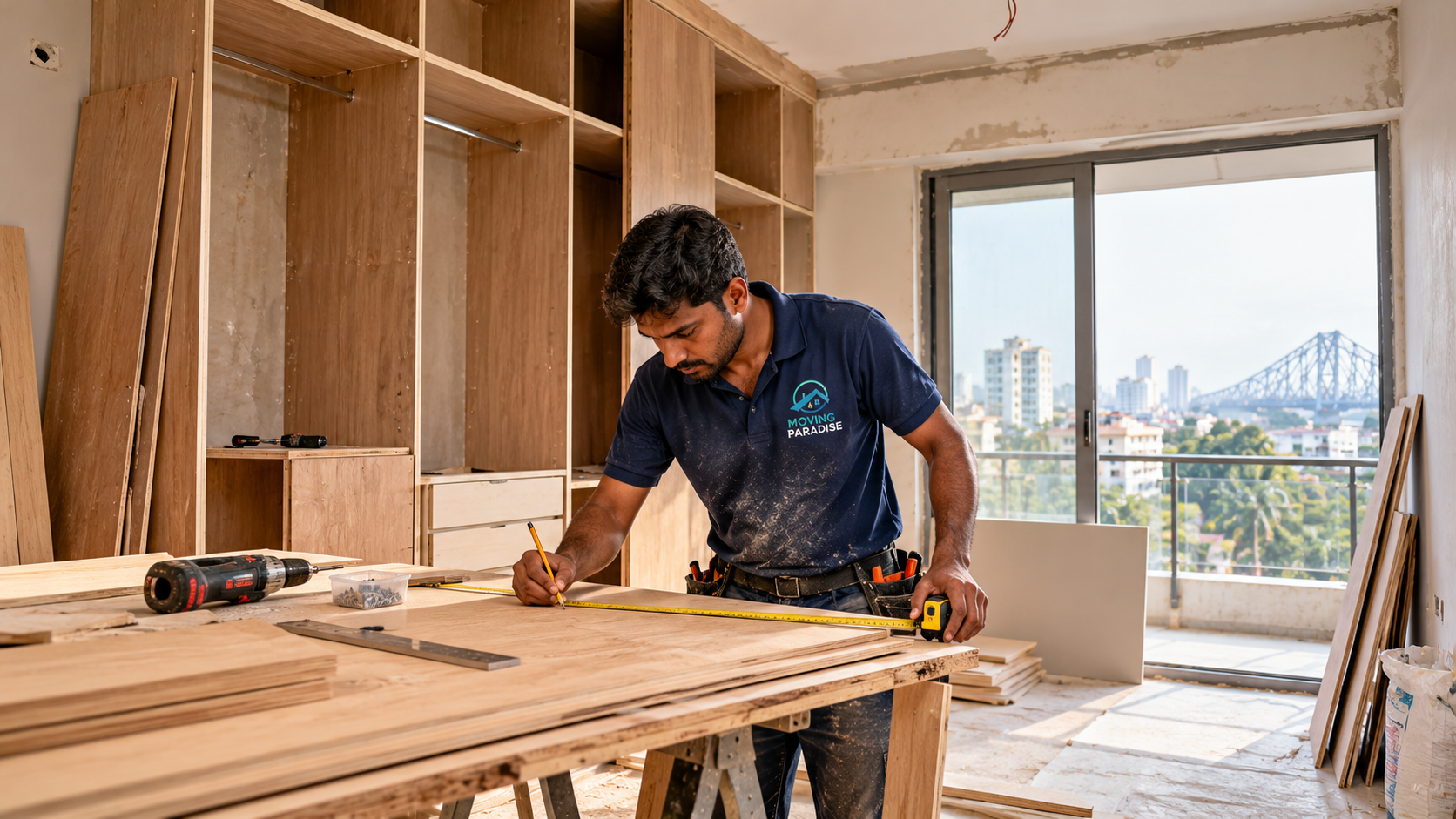
A carpenter-led team skips the drawing phase entirely and builds directly from measurements taken on your site. This works best when you know exactly what wardrobes or beds you want and just need someone to cut the wood and fix it.
You save the design fee, but you lose the safety net of a planned layout. What gets built stays built.
Custom wardrobes fitted perfectly into uneven walls.
Kitchen cabinets installed in under ten working days.
Repairs to existing wooden furniture during the same visit.
Hire them if your walls are straight and your design is simple; avoid them if you need plumbing moved or false ceilings aligned, as they lack those specific skills. A common error is asking a carpenter to guess electrical socket placements before the wood goes up, which costs around ₹2,000 to ₹5,000 per wall to fix later when wires need rerouting through finished panels.
For a standard 7-foot by 6-foot sliding wardrobe using 19mm commercial plywood, expect to spend between ₹35,000 and ₹55,000 including labor in Kolkata. Always verify that the adhesives and laminates they bring meet the Bureau of Indian Standards IS 710 specification for marine-grade plywood if you’re building near damp areas like bathrooms.
Online interior design platforms
Online platforms connect you with remote designers who send digital layouts, leaving the physical building to your own hired workers. They suit renters or buyers who want a professional look but plan to execute the labor themselves over several weekends.
You gain access to software-generated 3D models without paying a local firm’s premium. The limit is that the screen doesn’t show how uneven your actual floor is.
Ready-to-follow shopping lists with links to buy items.
Video calls to review paint swatches against your lighting.
Step-by-step assembly guides for flat-pack furniture.
This route isn’t for anyone who needs structural changes, plumbing shifts, or custom woodwork measured to the millimeter. You still have to measure your rooms accurately with a steel tape, not a phone app, because a half-inch error ruins the whole delivery. Prices start around ₹20,000 for a single-room digital package, but the total cost depends entirely on the furniture you end up buying yourself.
Other affordable design options
Student collectives: Final-year design students often take real projects for portfolio credit, charging only for printing and travel. Reach out to local colleges if you just need a fresh concept layout. Ask the department head which students already have site experience. A student who has never visited a construction site will draw walls that can’t be built.
Material showroom planners: Large tile or laminate stores in Kolkata sometimes offer free layout planning when you buy their products. Use this if your only goal is picking matching surfaces. They won’t coordinate your electrician or plumber. Expect them to push the inventory sitting longest in their warehouse.
Modular kitchen brands: Companies selling pre-cut factory cabinets offer fixed-price packages that undercut custom carpentry. Pick this if your kitchen dimensions match their standard module sizes. Measure the distance between your gas line and sink before visiting any showroom. If that span falls outside their standard increments, they will charge custom rates. That surcharge usually erases the savings over a good local carpenter.
Picking the right interior designer
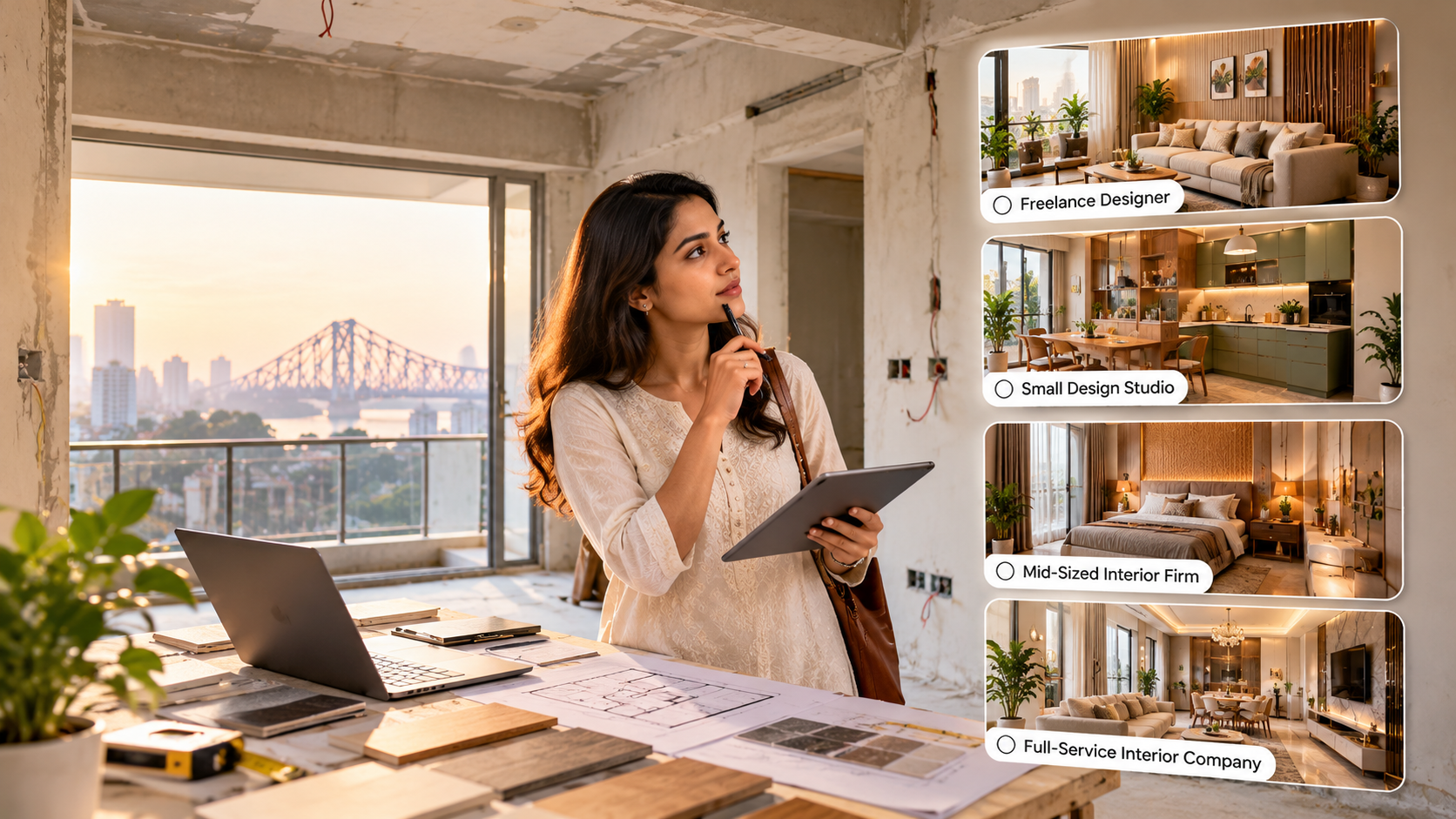
Your current space decides where to start. If your flat has bare concrete walls and no wiring, hire a small local design studio to manage the civil work first. If your rooms are painted and wired but feel empty, a freelance designer fills them without unnecessary demolition.
Time matters just as much. If you can visit your site every evening to check progress, a carpenter-led team works well because you catch errors early. If you work long hours and can’t supervise, an online platform paired with a trusted local contractor prevents mistakes you won’t see until the bill arrives.
Your goal settles the final choice. Renting for two years means you shouldn’t build fixed wardrobes; stick to freelance advice for movable furniture. Owning the flat justifies the studio’s permanent installations.
You can combine a freelance designer’s layout with a carpenter’s execution to save money. However, mixing an online platform’s digital plan with a small studio’s physical contract usually causes arguments over who takes blame when measurements fail. Pick one primary guide and let the others support it, rather than paying two people to manage the same room.
Frequently asked questions
How much do low-cost designers charge in Kolkata?
Between ₹15,000 and ₹50,000 for a single room, assuming you hire a freelancer or student for layout planning only. Full apartment execution by a small studio ranges from ₹3,00,000 to ₹5,00,000 for basic finishes. Your final number changes based on the square footage and whether you choose imported or local materials.
Can I hire a designer just for one room?
Yes, freelancers and online platforms sell single-room packages without forcing a whole-house contract. You’ll receive a layout, color palette, and shopping list for that specific space. This works best for living rooms or master bedrooms where you want a focused upgrade.
Why do some designers ask for advance payments?
They need cash to book materials and secure worker dates before starting your site. A standard practice is splitting the total fee into three parts: booking, mid-project, and handover. Never pay the full amount before seeing the first physical result.
How long does a basic apartment makeover take?
About 30 to 45 days for a standard two-bedroom flat, assuming no major structural changes and timely material delivery. Carpentry takes the longest, usually around 20 days. Delays happen if you change your mind about tile colors after ordering begins.
Is it safe to use cheap plywood for kitchens?
No, standard commercial plywood warps within two years of exposure to kitchen steam and water spills. You need BWP (Boiling Water Proof) grade boards for any cabinet touching a sink or stove. Check the stamp on the sheet before the carpenter cuts it.
What happens if I don’t like the final design?
You’ll still owe payment for the labor and materials already used, even if the aesthetic isn’t what you imagined. This is why approving 3D renders or detailed sketches before construction starts protects your money. Changes during building cost extra.
Does hiring locally matter for small budgets?
Yes, a designer based in your neighborhood saves transport costs and knows which local hardware shops give discounts. They also understand the specific building rules of your housing society. Distant firms add travel fees that eat into your material budget.
Can I buy my own materials to save money?
You can, but designers often get trade discounts you won’t find in retail stores. If you buy yourself, you also take full responsibility for wrong sizes or damaged deliveries. Discuss this openly before signing any contract.
Starting your interior project
Pick one room and hire a freelancer or student to draw its layout first. You’ll know it’s working when the plan shows exactly where every socket, shelf, and light fits without overlapping.
Stop immediately and consult a structural engineer if your chosen team suggests removing a wall without checking the building’s original blueprints.
A common mistake is paying for a full-house concept before testing one room. That locks you into a style before you discover how your furniture actually fits the space.
Start with the room you use most. If the layout solves your daily friction there, the same logic will carry through the rest of the house.