
A good walk in closet design needs at least 6 feet of depth, 24 inches for hanging rods, and 14 to 16 inches between shelves. It’s built around the clothes you own, not a magazine picture. This guide covers the layout steps, shelf spacing, lighting choices, and the clearances that decide if it actually works day to day.
What a fitted closet space really is
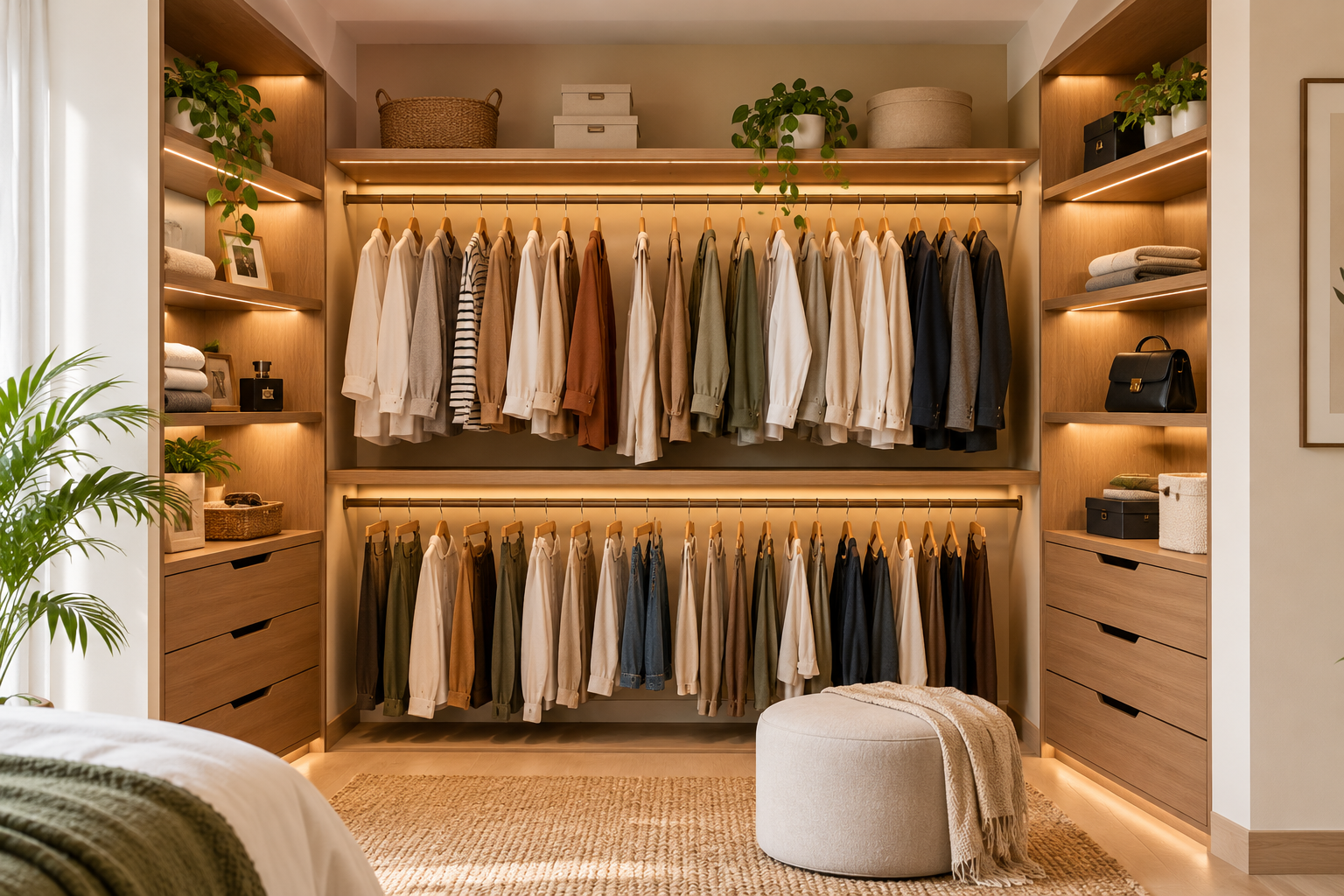
It’s a room or alcove built to store clothes on open rods and shelves instead of behind doors. You step inside it, which is why the depth matters more than the width. It’s for anyone who has outgrown a reach-in wardrobe and needs daily access to everything without digging through stacks.
The one thing people get wrong is treating it like a small bedroom. A bedroom holds furniture; this space holds inventory. Every inch needs a job. The mechanism is simple: gravity keeps hangers vertical, so the rod height decides what fits below it. Long coats need about 60 inches from rod to floor, while folded shirts need only 12 inches of shelf space.
If your room is under 5 feet deep, you can’t put hanging rods on both sides and still walk down the middle. In that case, use one wall for hanging and the opposite wall for shallow shelving. You’ll find exact clearance rules in the NKBA planning guidelines, which set the standard for built-in storage spaces.
How to lay out a walk in closet
You don’t start by buying bins or picking paint colors. You start with the walls and work inward, measuring twice before you drill anything.
Measure the room’s length, width, and ceiling height in inches. Write these three numbers down first.
Mark a 36-inch wide path down the center or along one side. This is your walking space, and you can’t shrink it.
Install the top hanging rod 80 to 84 inches from the floor. This leaves room for long dresses and coats underneath.
Add a second rod 40 to 42 inches from the floor for shirts and pants. That gives you double hanging in the same spot.
Mount shelves 14 to 16 inches apart. Anything wider wastes space; anything tighter crushes folded sweaters.
Leave 24 inches of depth for every hanging section. Standard hangers are 17 inches wide, and they need clearance from the back wall.
Place shoe racks or cubbies near the door. You grab them last, so keep them out of the deep corners.
Add a light source above each rod. LED strips running along the shelf edge work better than one ceiling bulb.
The single judgment call is where to put the tall items. If you have more coats than shirts, give the long-hang section the prime corner. If you wear mostly folded knits, trade that tall space for extra shelving. Getting this wrong means you’ll end up stacking winter coats on the floor because the rods don’t match your actual wardrobe.
Walk in closet measurements and spacing
These are the figures you’ll check while you’re holding a tape measure and a pencil. They assume standard adult clothing and an 8-foot ceiling.
Situation | What to use | How long | What to watch for |
|---|---|---|---|
Double hanging (shirts/pants) | Two parallel metal rods | 40 inches between rods | Bottom clothes dragging on shoes below |
Long hanging (coats/dresses) | Single top rod | 60 to 64 inches to floor | Rod bowing in the middle past 48 inches wide |
Folded sweaters and jeans | Flat wood or wire shelves | 14 to 16 inches apart | Stacks leaning forward and falling over |
Center aisle for walking | Clear empty floor space | 36 inches minimum width | Doors or drawers hitting the opposite wall |
Shoe cubbies | Angled or flat dividers | 8 inches high per pair | Heels taller than 5 inches won’t fit flat |
Top storage for luggage | Highest fixed shelf | 24 inches from ceiling | Too heavy to lift safely without a stool |
If your ceiling is 9 feet instead of 8, add that extra foot to the top shelf, not the hanging rods. Your arms can’t comfortably reach higher than 84 inches anyway. For wider rooms over 8 feet across, you can run hanging sections on three walls, but keep the 36-inch aisle clear in the center.
Getting the details right in closet layouts
Preparation decides how the finished space feels. Before you mount anything, pull every piece of clothing out of your current wardrobe and sort it into piles: hang, fold, toss. You build the space for the “hang” and “fold” piles, not for the things you haven’t worn in two years.
Work from the top down. Mount the highest shelf first, then the top rod, then the lower rod. If you install the bottom pieces first, you’ll be working over them and scratching the finish. Check the wall studs with a magnetic finder before drilling. Anchors in drywall alone will pull out once a rod holds thirty pounds of winter jackets.
Halfway through, stop and hang five shirts on the new rod. Close the door if there’s one. Open the drawers. Does the fabric brush against the opposite wall? If it does, move the rod back an inch now. Fixing it later means patching painted drywall and buying longer brackets.
Leave the corners for fixed shelves, not hanging rods. Hangers don’t turn corners well. A 12-inch deep corner shelf holds purses or boxes perfectly, while a rod wrapped around a corner just creates a dead zone where clothes get crushed together.
Don’t skip the ventilation. Clothes release moisture, especially after being worn. If the room has no window, leave a half-inch gap under the door or install a small vent grille. Trapped humidity smells musty within a few months.
Troubleshooting common closet fitting problems
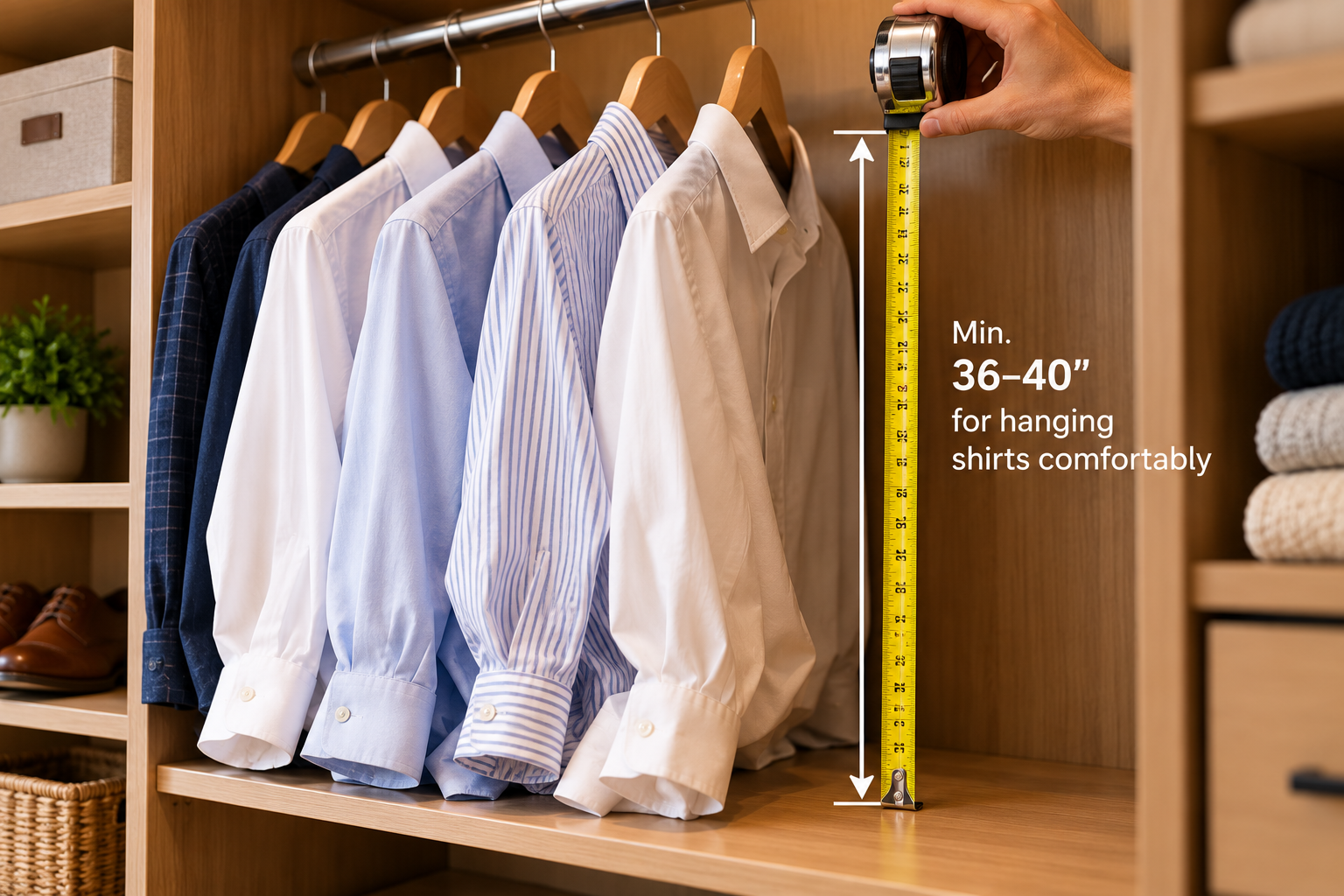
When something doesn’t look or work right, the cause is usually a measurement taken too fast. Here’s how to match the symptom to the fix.
What you notice | What it usually means | What to do first |
|---|---|---|
Shirts drag on the shelf below | Lower rod is mounted too low | Raise the bottom rod 2 inches |
Shelves sag in the middle | Span is too wide for the material | Add a center bracket support |
Room feels dark even with lights | Bulbs are blocked by stacked clothes | Move fixtures to the front shelf edge |
Drawers hit the opposite wall | Aisle is narrower than 36 inches | Swap drawers for sliding baskets |
Musty smell after a few weeks | No airflow in an enclosed space | Leave a gap under the door |
If a rod bows downward, it’s carrying too much weight for its length. Metal rods shouldn’t span more than 48 inches without a center support. Wooden dowels bend even faster. Don’t just add more clothes hoping it’ll hold; the brackets will pull out of the wall next.
Rules for safe closet building
Local building codes treat closets as part of the home’s living space, so electrical work inside them has strict limits. The National Electrical Code requires light fixtures in closets to be fully enclosed or recessed. You can’t hang a bare bulb near stored fabric. Check your local municipality’s adopted version of the NEC before wiring anything new.
Weight matters too. A fully loaded 6-foot hanging rod can hold over 50 pounds. The brackets must go into wooden wall studs, not just drywall anchors. If you’re unsure where your studs are, or if your walls are plaster and lath, hire a carpenter. Pulling a loaded rod out of the wall ruins the drywall and dumps your clothes on the floor.
Ventilation isn’t optional if you’re closing off a windowless room. The EPA notes that indoor moisture buildup encourages mold growth on porous surfaces like fabric and wood. If your space lacks airflow, you’ll need a mechanical vent or a dehumidifier rated for small rooms.
Keeping your storage space working
Once it’s built, the layout only stays useful if you maintain it. Dust settles fast on open shelves. Wipe the top shelves and light fixtures once a month with a dry microfiber cloth. Vacuum the floor weekly, especially if you store shoes at ground level.
Wood shelves expand and contract with humidity changes. If you live somewhere damp, keep a small hygrometer on the middle shelf. If the reading stays above 60 percent, run a plug-in dehumidifier during wet months.
Don’t shove seasonal clothes into the back and forget them. Twice a year, swap your winter coats to the high shelves and bring summer clothes down to eye level. This rotation keeps the daily rods from getting overcrowded. If a rod starts bending or a shelf sags again, empty it immediately and check the brackets. Catching a loose screw early saves you from replacing the whole board later.
When a different storage method works better
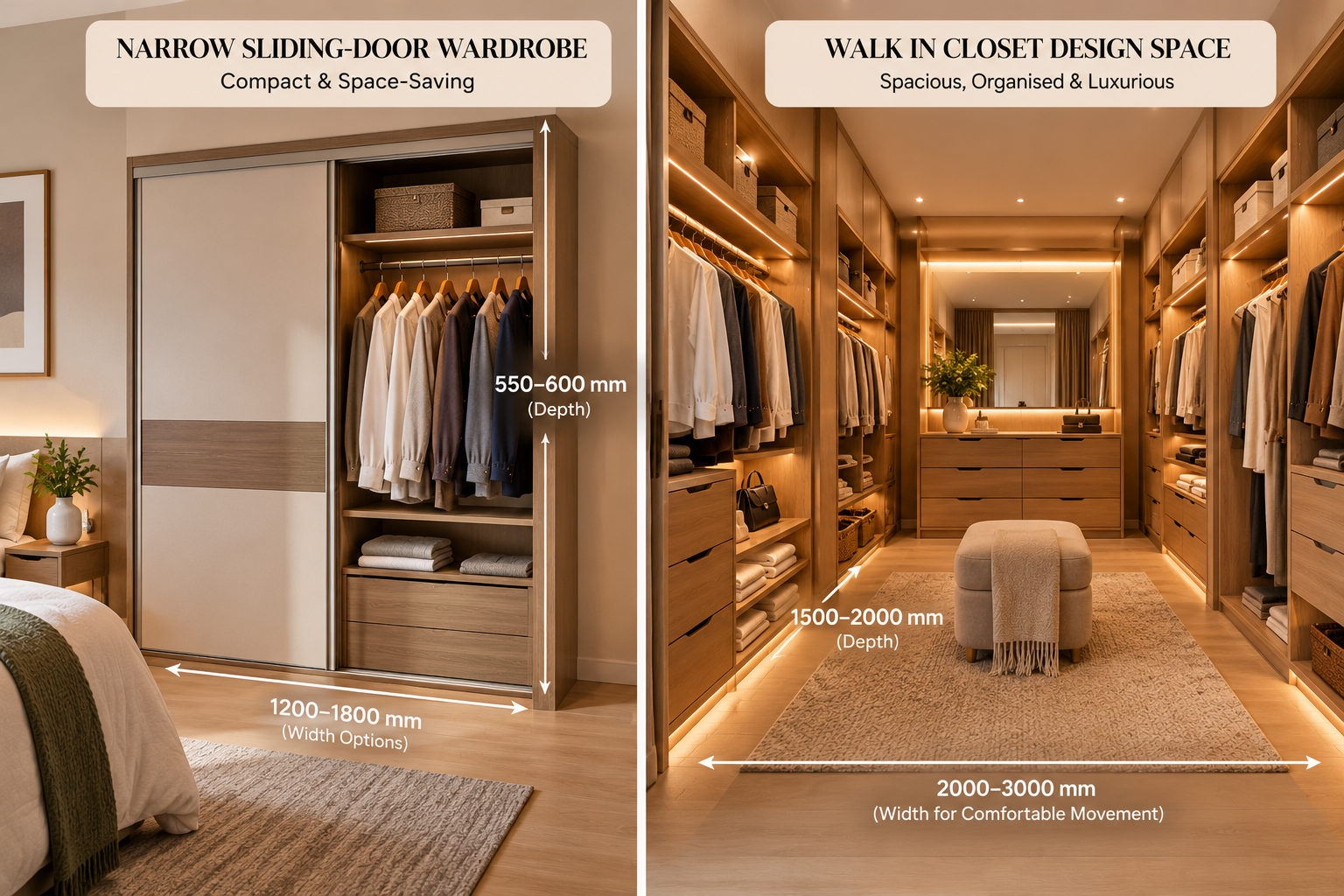
This layout fails in narrow spaces. If your room is less than 4 feet deep, you don’t have enough depth for hanging rods and a walking path. Use a reach-in closet system with sliding doors instead. You’ll stand outside it and pull things toward you.
It’s also the wrong choice if you rent and can’t drill into studs. Heavy loaded shelves require permanent mounting. Renters should use freestanding wardrobe units or tension-rod systems that press between the floor and ceiling without screws.
Finally, skip this if you share a tiny room with a partner who gets dressed at the same time. Two people turning around in a 5-by-5 foot box leads to bumped elbows and knocked-down stacks. In that case, split the clothes into two separate reach-in wardrobes on opposite walls.
Frequently asked questions
How deep does a walk in closet need to be?
It needs at least 6 feet of depth to hold 24-inch hanging rods on both sides with a 36-inch walking aisle in the middle. If you only have 5 feet, put rods on one wall and shallow shelves on the other.
Can you put a walk in closet in a small bedroom?
Yes, but you’ll lose floor space. A 4-by-4 foot alcove works if you use a single-wall hanging system. Anything smaller becomes a reach-in cabinet rather than a room you step inside.
How much does custom closet shelving cost?
Prices change based on materials, labor rates in your city, and the size of the room. Wire shelving kits from hardware stores run far less than built-to-order wood cabinetry. Get three quotes from local installers to compare.
Is it safe to put lights inside a closet?
Yes, if you use enclosed LED fixtures or recessed cans approved for closet use. The National Electrical Code bans exposed incandescent bulbs near stored clothing because the heat can ignite fabric.
Why do my closet shelves bow in the middle?
The unsupported span is too wide for the shelf material. Particleboard sags past 30 inches without a center bracket. Solid wood or plywood handles wider spans, but every shelf over 36 inches needs middle support.
How many hanging rods do I need?
Count your hangers first. Most adults need about 40 inches of rod space for short items like shirts and 20 inches for long items like coats. Divide your total hanger count by those widths to find your required rod length.
What happens if the closet has no ventilation?
Trapped body heat and moisture from worn clothes raise the humidity. Over a few weeks, that damp air causes mildew on leather shoes and cotton shirts. Leave a gap under the door or install a small exhaust fan.
Conclusion
Every room has its own shape, and the dimensions that work for a square layout won’t fit a long hallway. Measure your own walls, count your own hangers, and read the numbers off your tape measure — that’s the only plan that fits your house.