
The best home renovation in kolkata starts with three numbers: your budget, your flat’s age, and your society’s written rules. Most Kolkata flats need 6–10 weeks of work for a full 2BHK renovation, and civil work can’t start until your housing society approves it in writing.
That approval is where schedules actually break. Many older buildings in Ballygunge, Salt Lake and Behala restrict drilling and demolition to fixed daytime hours, so a job quoted at 8 weeks can run to 12 if your contractor never asked.
Get the society’s no-objection letter before you pay a single booking advance. If the flat is old, budget for rewiring and plumbing replacement even when the walls look fine.
This guide covers the real steps, the costs that surprise people, and when to walk away.
What renovation means here

Home renovation in Kolkata means repairing and upgrading an existing flat or house — kitchen, bathrooms, flooring, wiring, plumbing, painting — rather than building new. It’s for owners and long-term renters who plan to stay at least three years. The one misconception people bring: that renovation is mainly about looks. It isn’t. In older buildings, most of the money goes into things you’ll never see — waterproofing, electrical load, and pipe replacement.
One rule matters more than any design choice. In a co-operative housing society, structural changes and even some internal work need the managing committee’s prior written approval. In a co-operative housing society, this approval is required by the society’s own bye-laws. If you skip this step, your society can stop the work mid-way and you’ll pay for undone labor. Always ask your secretary for the approval process in writing before you sign any contractor agreement.
How to plan and run the renovation
Get society approval first. Submit your plan and pay any refundable deposit the society asks for. Wait for written permission — this usually takes 1–3 weeks.
Fix your budget in writing. Split it roughly 60% materials, 25% labor, 15% buffer. For a 2BHK, a mid-range full renovation in Kolkata typically runs several lakh rupees; get three itemized quotes and compare line by line, not totals.
Hire a licensed electrical contractor. Kolkata’s electricity supply comes through CESC or WBSEDCL depending on your area, and any load upgrade application must go to your actual distribution company. Ask your contractor which one serves your pin code.
Do the messy work first. Demolition, plumbing, and electrical rewiring happen in weeks 1–3. Flooring and tiling follow in weeks 3–5. Painting and carpentry come last.
Test waterproofing before tiling. Fill the bathroom floor with water and leave it 24 hours. Check the ceiling below. Only then lay tiles.
Inspect at three checkpoints. After wiring, after plumbing, and after waterproofing. Photograph everything before it’s covered up.
Hold back 10% payment until a final walkthrough, usually 7–10 days after handover.
The single judgement call: sequence. Contractors who tile before finishing plumbing cause the most rework, and rework costs both money and weeks. If your flat is old, replace pipes and wiring rather than patch them; if it’s relatively new, patching is often fine.
Key numbers at a glance
These figures assume a standard 2BHK of about 800–1,000 sq ft. Larger flats scale up roughly in proportion; smaller ones cost slightly more per sq ft because fixed costs don’t shrink.
Situation | What to use | How long | What to watch for |
|---|---|---|---|
Full 2BHK renovation | Licensed contractor, itemized quote | 6–10 weeks | Society approval delay |
Kitchen only | Modular units, new plumbing | 2–3 weeks | Water line position |
Bathroom only | Waterproofing, tiles, fittings | 2–3 weeks | Leakage to flat below |
Electrical rewiring | Licensed electrician, ISI-marked wire | 1–2 weeks | Load capacity for ACs |
Painting only | Interior emulsion, 2 coats | 5–7 days | Damp patches on walls |
Older building (20+ years) | Full pipe and wire replacement | 10–14 weeks | Hidden structural issues |
Monsoon timing | Avoid external work | — | Rain delays, damp |
What separates good work from bad
Experienced renovators prepare before anyone lifts a hammer. They photograph every wall, take measurements, and mark where old wiring and pipes run. They also confirm the exact tile and paint batch numbers before ordering, because a second batch of the same tile can differ slightly in shade — and matching it later is expensive.
They work in one direction, room by room, finishing each space before moving on. This keeps dust contained and lets you live in part of the flat. They check partway through: after wiring, they test every socket and switch; after plumbing, they run every tap and check for drips for a full day.
What they leave alone matters just as much. Original structural walls, load-bearing beams, and the building’s external facade stay untouched. Drilling into a load-bearing wall without an engineer’s approval is where serious problems start.
The paperwork habit
Keep every bill, warranty card, and contractor receipt in one folder. When you sell or rent the flat later, buyers ask about renovation age and warranty on fittings. A missing warranty card can cost you a free replacement.
The timing habit
Schedule the noisiest work — demolition and drilling — for weekday daytime hours. Kolkata societies usually restrict loud work to specific hours, and neighbors will complain if you ignore this.
Common problems and fixes
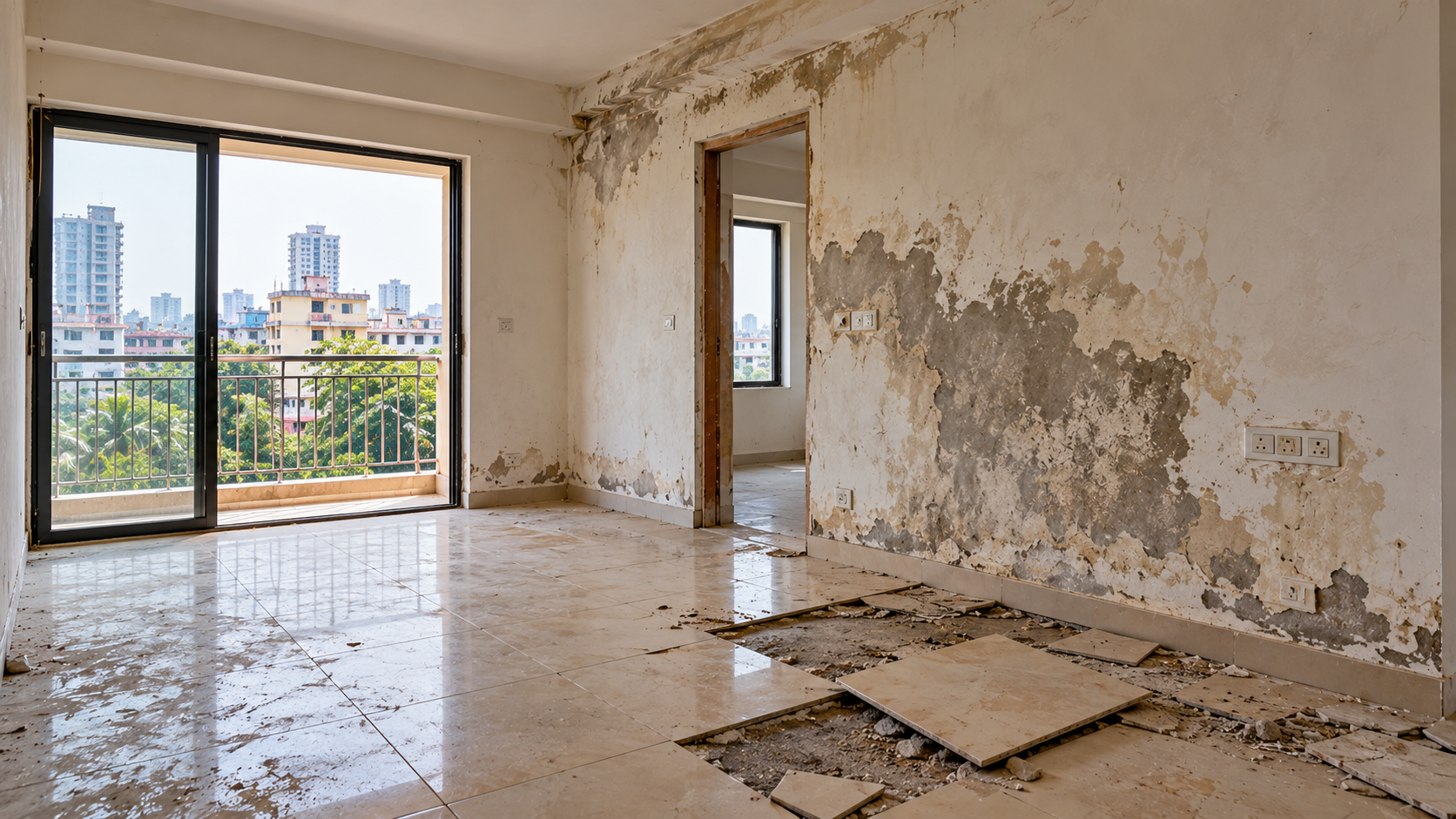
Most renovation problems trace back to one of a few causes. Here’s how to match what you notice to what to do first.
What you notice | What it usually means | What to do first |
|---|---|---|
Damp patch on wall | Water seepage from outside or a leaking pipe | Find the source before painting over it |
Tiles lifting after a month | Poor adhesive or no waterproofing base | Stop payment, call contractor back |
Lights flickering | Loose connection or overloaded circuit | Switch off, call a licensed electrician |
Water pooling in bathroom | Wrong floor slope | Re-lay tiles before final payment |
Paint peeling in monsoon | Damp wall or cheap primer | Fix damp, then repaint with primer |
Cracks near door frame | Settlement or structural movement | Get a structural engineer’s opinion |
The rules that apply
Kolkata renovations sit under several authorities. Your housing society’s managing committee controls internal work approval, under the West Bengal Co-operative Societies Act. For electrical load changes, you must apply through your local distribution company — CESC or WBSEDCL. Wiring and fittings should carry the ISI mark, which shows they meet the relevant Bureau of Indian Standards specification.
If your building is heritage-listed, the Kolkata Municipal Corporation must approve any external change. Structural work — knocking down walls, adding floors — needs a licensed structural engineer’s certificate. If your building is old, get a structural check before any major work. That’s not a DIY call; hire a qualified engineer.
Keeping it working afterwards
Once the work is done, protect it. Keep a file with all warranties, contractor contacts, and the approval letters from your society. Most paint warranties run several years, and fittings like taps and switches carry their own warranty periods — check each product’s card, since terms differ by brand.
Reseal bathroom joints and check for damp patches before every monsoon, usually around May. If you see a new crack or a damp spot, fix it that season rather than waiting. Small repairs cost far less than the damage they prevent. Bring the contractor back for any warranty issue within the warranty window, in writing.
When renovation isn’t the right choice
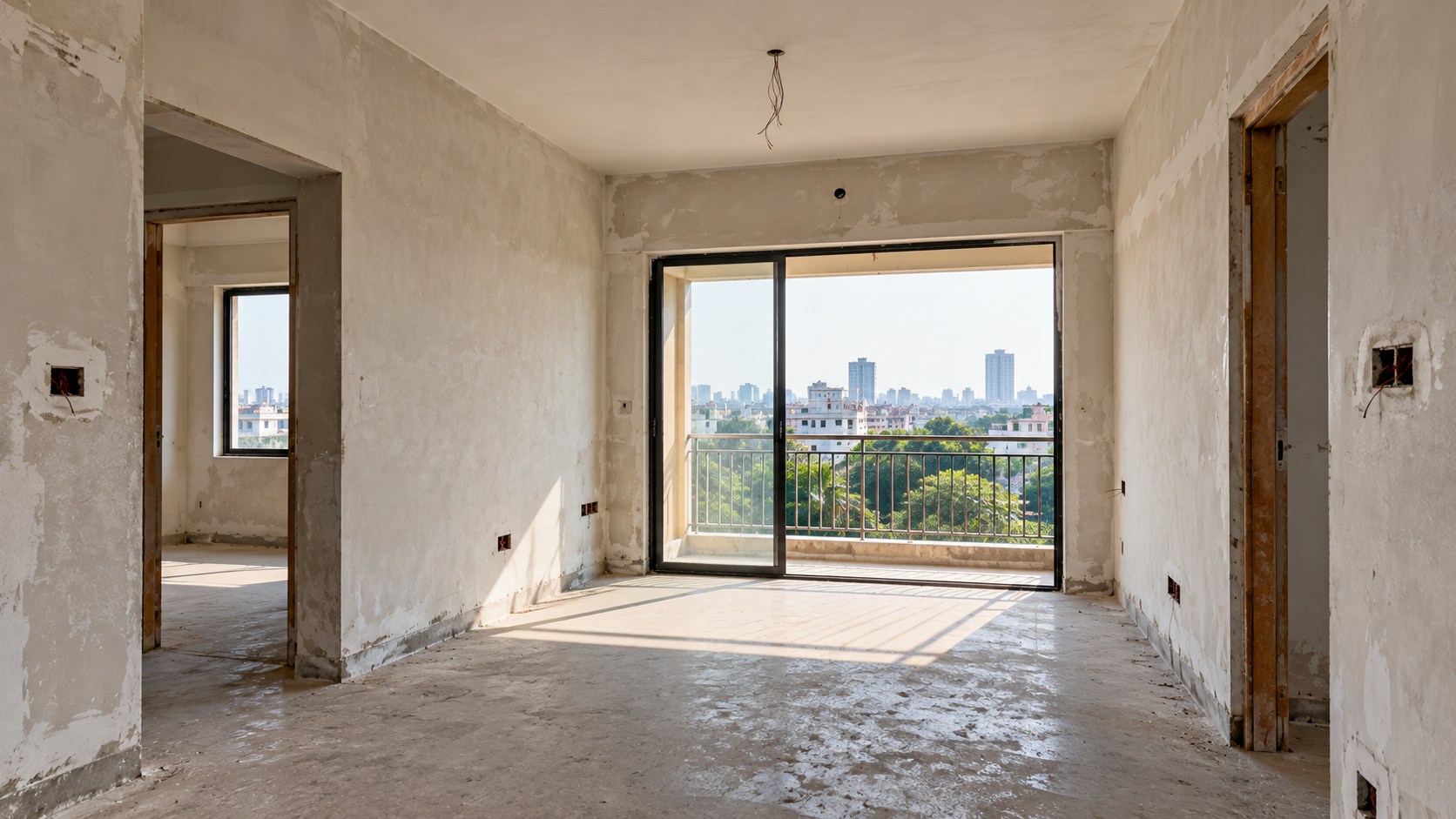
Renovation isn’t always the answer. If your building is scheduled for demolition or redevelopment, spending on renovation is money lost — talk to your society about the timeline first. If your flat has serious structural damage, repair or relocation may be safer than renovating around it.
If you’re renting and don’t have a long lease, negotiate with your landlord instead of paying yourself. Cosmetic work on a rented flat rarely earns back what you spend, and a landlord who won’t share the cost is telling you something.
And if your budget only covers cosmetic work but the flat needs new wiring and plumbing, save longer. Doing it in the wrong order means paying twice.
The order matters more than the finish. Wiring, plumbing and waterproofing come first, because opening a finished wall later costs you the wall. Paint and flooring go last, once nothing else will be disturbed.
If the building is sound and you own the flat, renovate. If the building’s future is unclear, wait.
Frequently asked questions
How long does a full home renovation take in Kolkata?
For a standard 2BHK of about 800–1,000 sq ft, expect 6–10 weeks of actual work. Add 1–3 weeks for society approval before work starts. Older buildings needing pipe and wire replacement can take 10–14 weeks.
How much does home renovation cost in Kolkata?
Costs vary widely by material quality and flat size. Get at least three itemized quotes and compare line by line. A rough split is 60% materials, 25% labor, 15% buffer. Ask contractors for current rates, since prices change with material costs.
Do I need society approval before renovating my flat?
Yes. In a Kolkata housing co-operative, internal work and any structural change need the managing committee’s written approval under the West Bengal Co-operative Societies Act. Starting without it lets the society halt your work mid-way.
Is it safe to knock down a wall during renovation?
Only if a licensed structural engineer confirms it isn’t load-bearing. Removing a load-bearing wall without approval can weaken the whole building and is illegal in most cases. Never let a contractor decide this alone.
Can I renovate during the monsoon in Kolkata?
Interior work is fine, but avoid external painting, waterproofing, and terrace work during heavy rain. Damp walls stop paint and adhesive from setting properly. Plan external work for the drier months, roughly November to February.
What happens if the contractor does poor work?
Hold back 10% of payment until your final walkthrough, usually 7–10 days after handover. If problems appear within the warranty period, ask for repairs in writing. For serious disputes, your society committee or a consumer forum can help.
How often does a renovated flat need touch-ups?
Paint needs recoating when it shows fading, chalking or peeling, sooner in damp areas. Bathroom sealant and grout need checking before each monsoon. Fix any new crack or damp patch in the same season you spot it.
Conclusion
Renovation in Kolkata rewards patience more than speed. Get the approvals, fix the hidden work first, and pay in stages tied to inspections. Do that, and your flat will hold up for years — not just look good on handover day.