
Selecting the right kitchen sunmica colour depends on your space’s size, the amount of natural light available, and how often you plan to clean your surfaces. Light tones like white, cream, or light grey make small kitchens look bigger, while dark shades like charcoal or navy add a modern, premium feel to larger areas. Laminates, commonly known as sunmica, are durable surface materials that come in many textures, but the visual impact of your kitchen relies heavily on how these hues interact with your flooring and lighting.
Trending kitchen sunmica colour styles
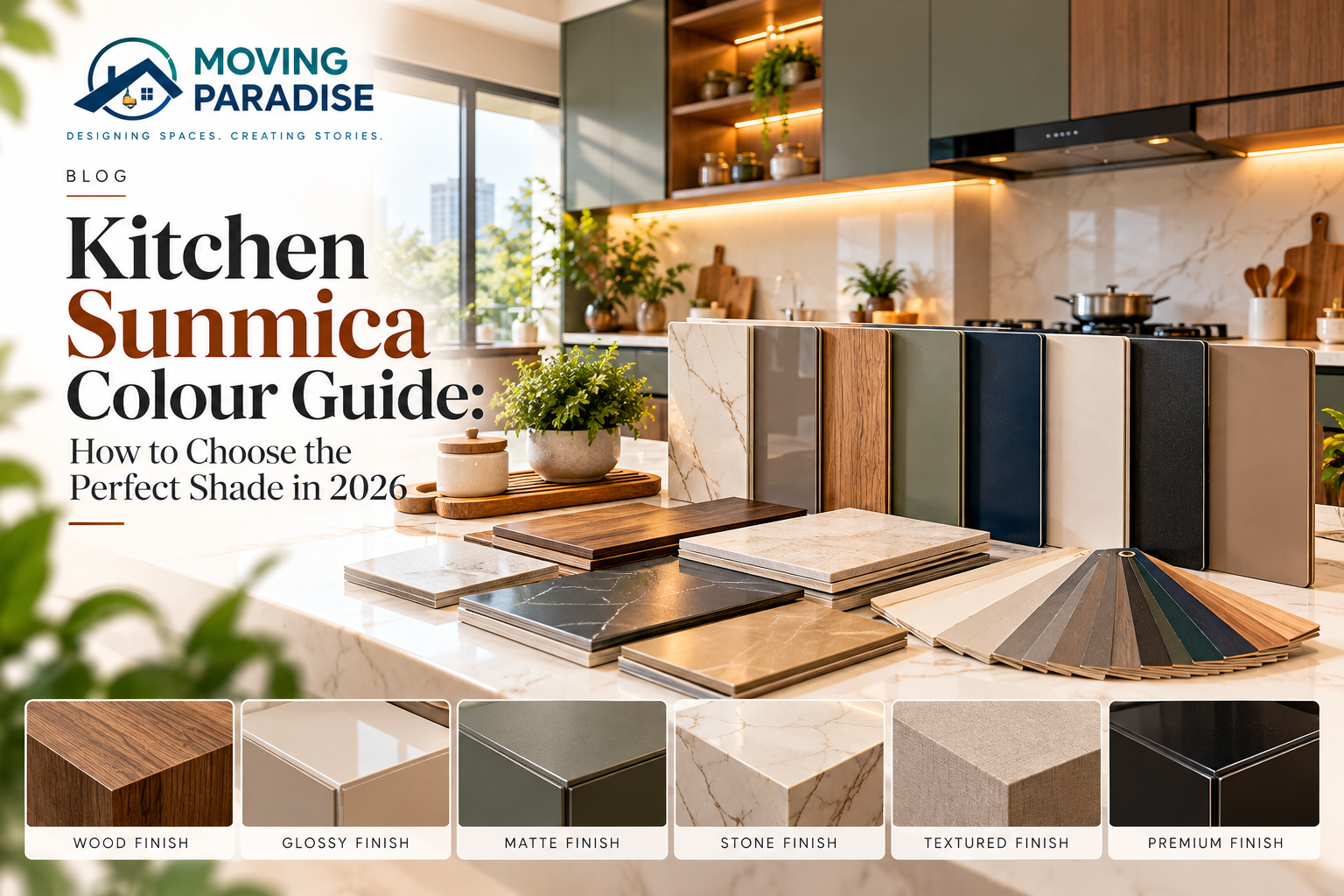
Choosing a finish is as important as picking a shade, as it affects both the look and the daily maintenance of your cabinetry.
Laminate Finish | Best For | Typical Example |
|---|---|---|
Matte | Hiding fingerprints | Solid charcoal grey |
Glossy | Reflecting light | Bright white gloss |
Textured | Mimicking wood | Light oak grain |
Metallic | Modern accents | Brushed copper effect |
Solid Color | Minimalist designs | Deep navy blue |
High-gloss surfaces amplify natural light, making small kitchens feel twice as large, but they demand daily wiping because every smudge shows. If you have young children or pets, choose a matte or textured finish to mask inevitable sticky fingerprints and minor scratches.
Check for glare before committing. If your kitchen receives direct afternoon sun, glossy cabinets will create blinding reflections that make the space uncomfortable. In that case, opt for a satin or matte finish to soften the light. Many homeowners mistake texture for durability, but deep grooves often trap grease. Use a simple rule: if your stove lacks a powerful vent hood, stick to smooth finishes for easier cleaning.
Matte finish laminates
Matte laminates are popular because they don’t reflect light, which helps hide smudges, fingerprints, and minor scratches that often appear in busy kitchens. This finish suits families with young children or those who prefer a soft, non-reflective aesthetic that feels warm and inviting. Matte surfaces are easier to maintain than high-gloss options because they don’t show every water droplet or streak.
They provide a sophisticated, flat appearance that pairs well with industrial or farmhouse kitchen themes.
The lack of glare makes them ideal for kitchens with many windows or strong overhead artificial lighting.
These laminates are resistant to the wear and tear of daily cooking, staying consistent in appearance over many years.
You can clean them with a soft cloth and mild soap, avoiding the need for specialized polishing products.
If you have a large kitchen, a dark matte color like slate grey creates a grounding effect. You might use this on lower cabinets while keeping upper units in a lighter shade to balance the weight of the room.
High-gloss finish laminates
High-gloss laminates are designed to reflect light, which visually expands the size of a cramped or narrow kitchen space. These are best for homeowners who love a sleek, contemporary, and high-energy environment. While they look stunning, they require more frequent wiping, as the reflective surface highlights dust, grease, and fingerprints much more clearly than matte alternatives.
The reflective quality mimics the look of glass or polished stone, elevating the luxury feel of your cabinetry.
Glossy surfaces are very easy to wipe down because the smooth finish prevents dirt from clinging to the material.
They work best in kitchens that lack natural sunlight, as they bounce whatever light is available around the room.
The vibrant color depth achieved with gloss makes bold choices like red or bright yellow stand out significantly.
For a modern apartment kitchen, a high-gloss white laminate is a classic choice. It keeps the area feeling airy and clean. When installing, ensure your National Kitchen and Bath Association guidelines for workspace clearance are met so your high-gloss cabinets remain protected from heavy impacts.
Textured and wood-grain laminates
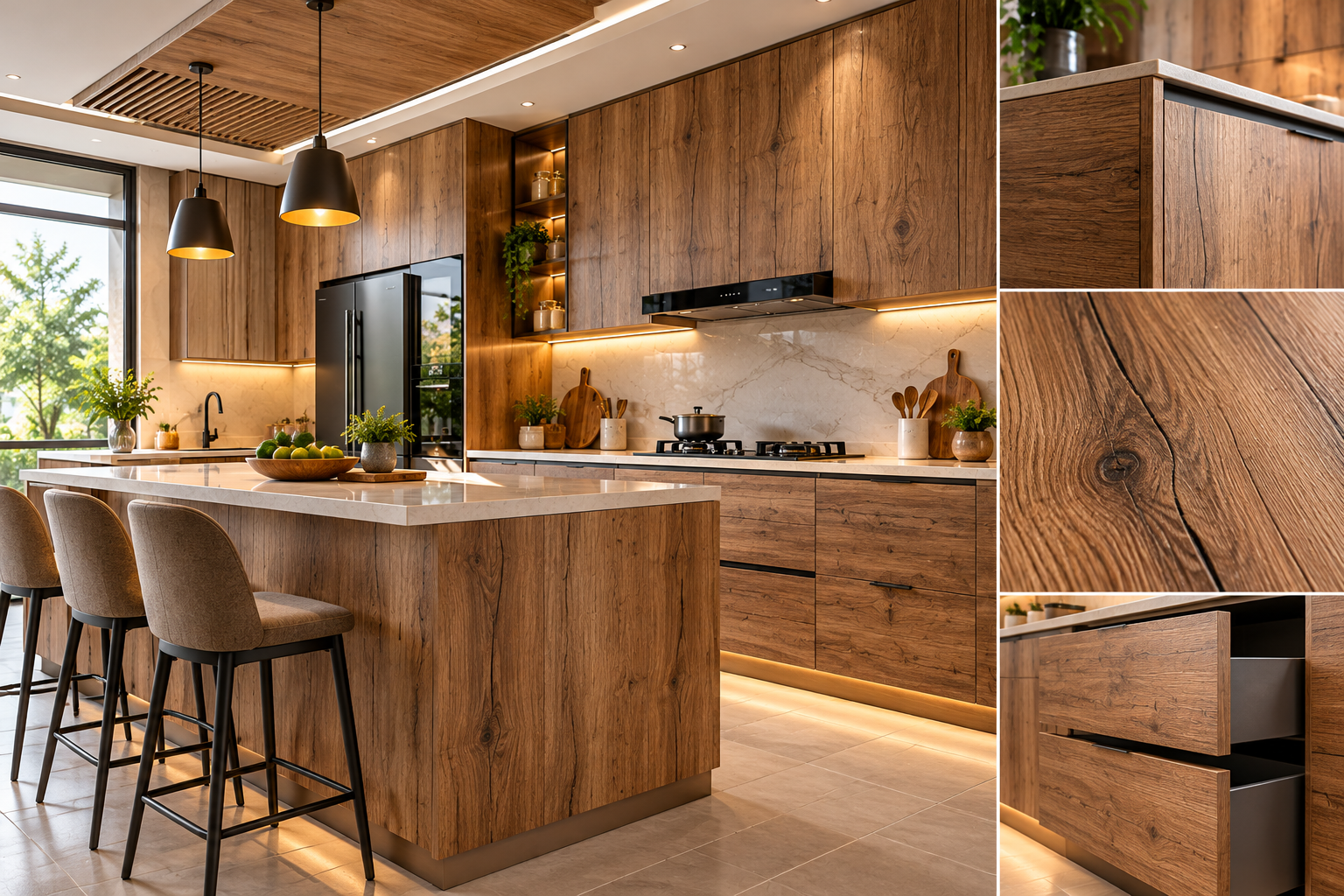
Textured laminates bring the warmth of natural materials into the kitchen without the high maintenance requirements of real wood. They’re perfect for people who want a rustic or organic vibe but need the water resistance and durability of a synthetic surface. These laminates often feature deep grooves or patterns that simulate the look of oak, walnut, or pine, offering a tactile experience that flat colors can’t provide.
The texture helps disguise dust and small scratches, making it a practical choice for high-traffic areas.
These finishes add visual interest to a kitchen that might otherwise feel too sterile or clinical.
They pair beautifully with stone countertops, creating a balanced mix of natural and engineered textures.
Wood-grain patterns are timeless, meaning your kitchen will likely stay in style longer than with trendy, bright solid colors.
If you choose a heavily textured laminate, be aware that grease can sometimes collect in the deeper grooves. You’ll need to use a soft-bristled brush occasionally to keep those areas clean.
Metallic and patterned finishes
Metallic laminates are the bold choice for those wanting to create a focal point, often used on island units or as accent panels. These finishes provide a shimmering, high-end look that catches the eye and adds depth to a room. Unlike standard solid colors, metallic or patterned sheets often cost more and require careful installation to ensure the pattern aligns perfectly across cabinet doors.
They create an instant “wow” factor, transforming a standard kitchen into a custom, designer-looking space.
Metallic tones like gold, copper, or brushed aluminum work exceptionally well with dark cabinet colors.
Patterned laminates, such as those mimicking concrete or marble, provide the aesthetic of expensive materials at a fraction of the cost.
These finishes are generally as durable as standard laminates, resisting heat and moisture under normal cooking conditions.
Because metallic surfaces can look overwhelming, use them sparingly. A common mistake is covering every surface in a reflective metallic finish, which can make a kitchen feel chaotic. Instead, use these as accents on a single wall or a kitchen island to keep the design balanced and visually appealing.
Other laminate options for your space
Solid Primary Colors: Bright blues, greens, or yellows suit playful, energetic kitchen designs. Use these if you have neutral walls and want your cabinets to be the main feature of the room. Avoid these in small, windowless kitchens, as the intense saturation can make the space feel claustrophobic and smaller than it actually is.
Anti-Fingerprint Laminates: These high-tech surfaces feature a matte, non-porous finish that actively repels oils from hands. They’re ideal for busy households where the kitchen is the center of activity and constant cleaning isn’t possible. If your kitchen receives significant direct sunlight, choose these to prevent visible smudges from catching the light and ruining your clean aesthetic.
Stone-Effect Laminates: These mimic the look of granite or slate. They’re perfect for budget-conscious renovations where you want a natural stone appearance without the weight or the price tag of real slabs. If you choose these, ensure the edge profile is seamless to avoid the telltale brown line that reveals the laminate core.
Choosing the best color for your home
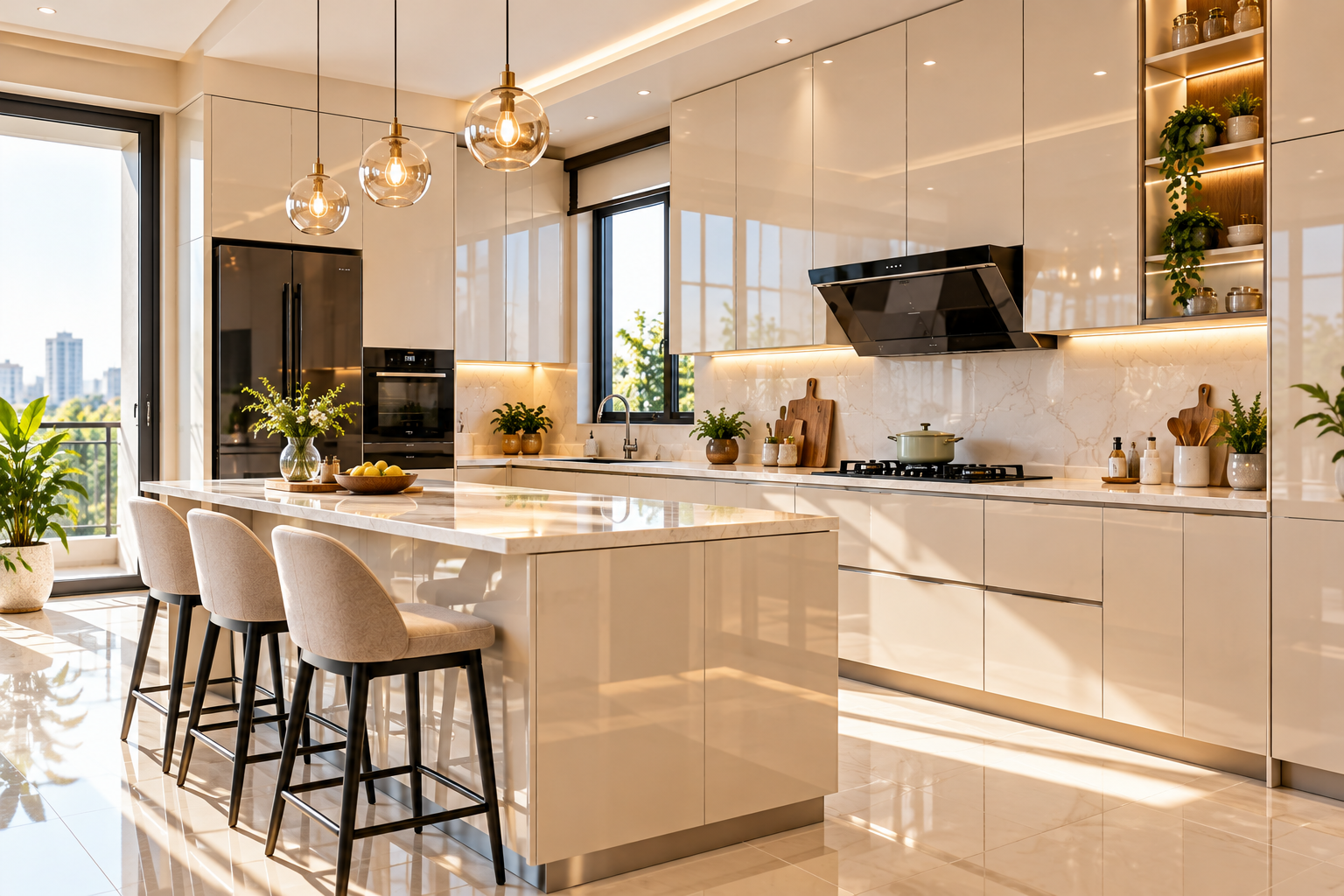
Deciding which finish and shade to pick involves looking at your kitchen’s existing light and size. If your kitchen has small windows or faces away from the sun, choose light-colored, high-gloss laminates to maximize light reflection and make the room feel larger. If you have a large, open-plan kitchen with plenty of natural light, you can afford to use dark, matte colors or textured wood grains to create a cozy, sophisticated atmosphere.
Your choice should also reflect your cleaning habits. If you prefer a kitchen that looks perfect with minimal effort, choose matte or textured finishes, as they hide imperfections much better than high-gloss surfaces. If you’re willing to wipe down your cabinets daily, the dramatic, reflective look of gloss is a great option.
Finally, consider the longevity of the color. Neutral tones like white, grey, and wood-grain will remain fashionable for years, while bright, bold colors may feel dated sooner. These laminates are generally long-lasting, but you can check the Consumer Product Safety Commission website for general information on household material safety standards. Whether you mix finishes or stick to one, ensure the color complements your flooring and countertops to create a cohesive look.
Frequently asked questions
Which kitchen sunmica colour is best for small kitchens?
Light colors like white, cream, or light grey are best for small kitchens. These shades reflect light and make the room feel more open and spacious. Using a high-gloss finish alongside these colors further enhances the effect by bouncing light around the space, which helps reduce the feeling of being in a cramped or dark area.
Do dark colors make a kitchen look smaller?
Yes, dark colors tend to absorb light, which can make a kitchen feel smaller and more enclosed. However, in a very large, well-lit kitchen, dark colors like charcoal or navy can create a sense of depth and luxury. If you have a small kitchen but want dark cabinets, use them only on the lower units and keep the top cabinets light.
How often do glossy laminates need cleaning?
Glossy laminates show fingerprints and water streaks quickly, so they often require daily wiping to maintain a clean appearance. Because the surface is perfectly smooth, a simple microfiber cloth and a mild glass cleaner are usually enough to keep them shining. If you find the upkeep too demanding, consider a matte finish instead.
Are wood-grain laminates easy to maintain?
Wood-grain laminates are quite easy to maintain because their patterns effectively hide dust, smudges, and minor scratches. Most dirt can be wiped away with a damp cloth and mild soap. The only specific care needed is ensuring you brush out any grease that might settle into the texture of the laminate grain over time.
Can I mix matte and glossy finishes in one kitchen?
Yes, mixing finishes is a popular design technique to add visual interest to a kitchen. A common approach is to use glossy finishes for upper cabinets to brighten the room and matte finishes for lower cabinets to hide scuffs from feet or chairs. Ensure the colors you pick for both finishes belong to the same palette to keep the design cohesive.
What is the most durable laminate finish?
Matte and textured finishes are generally considered the most durable for daily use because they’re highly resistant to visible scratches and fingerprints. While high-gloss laminates are just as strong in terms of material strength, they show wear and tear much faster. If you want a kitchen that looks new for a long time, prioritize matte or textured surfaces.
Conclusion
Start by visiting a local showroom to see large samples of your favorite colors in person. Lighting in your own home will change how a color looks compared to the store, so take a sample home to test it against your floor and wall paint. Stop and look for a different option if the sample looks dull or clashes with your existing kitchen elements under your home’s unique lighting conditions.