
Kolkata’s high humidity and heat force a move away from porous, moisture-trapping textures toward durable, non-absorbent surfaces. Wood swells, fabrics collect mold, and metals corrode in this climate. Prioritize materials that resist water absorption and allow for airflow to prevent damage. Selecting finishes that handle temperature shifts and heavy moisture ensures your space stays comfortable and clean.
How weather affects interior materials
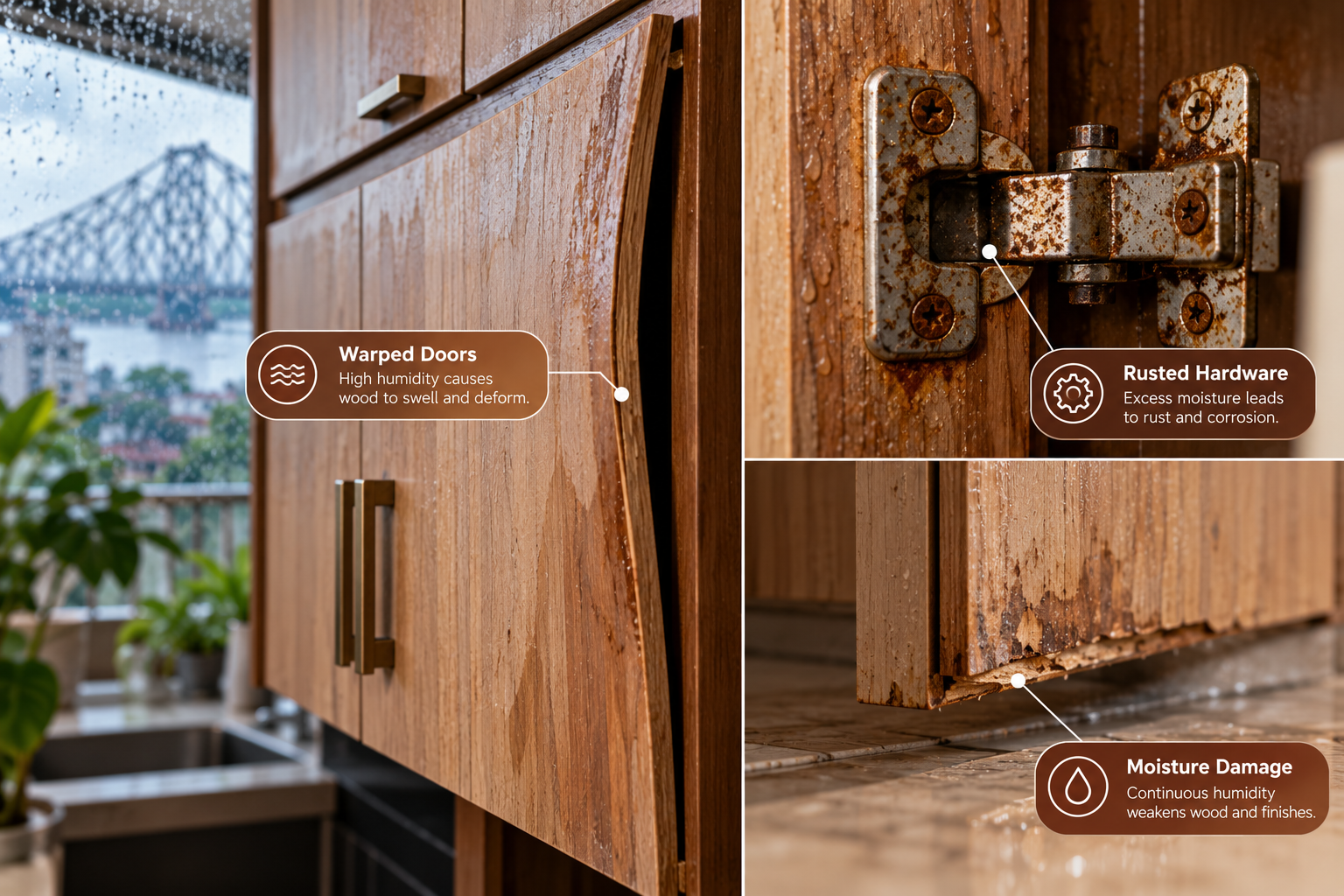
Part or input | What it does | What you notice when it goes wrong |
|---|---|---|
Solid wood | Provides structure | Warps, cracks, or sticks |
Metal hardware | Connects and fastens | Rust spots or surface pits |
Wall paint | Protects surfaces | Peeling, flaking, or dark mold |
Upholstery fabric | Offers comfort | Musty smells or visible mildew |
Laminate flooring | Covers floor area | Edges lift or surface bubbles |
What happens, step by step
Moisture enters the room through windows and doors during the monsoon season, which usually lasts from June to September. This increases indoor humidity levels significantly. Check your relative humidity guidelines to see how keeping levels below sixty percent stops mold growth.
Porous materials like raw timber and cotton begin to absorb water vapor from the air. This process happens slowly over a few weeks. You’ll notice wood furniture joints becoming tight or difficult to move as the material expands in the damp environment.
Once the humidity peaks, condensation forms on cooler surfaces like glass or metal fixtures. This water sits on the material, which creates the perfect environment for bacteria or mold to start growing. Wipe these surfaces daily if you see beads of water forming on them.
If the material isn’t sealed properly, the trapped moisture causes the finish to bubble or flake away. This usually takes one to three months of consistent high humidity. You’ll see paint peeling or laminate edges starting to lift away from the base material.
In the hottest months, usually April and May, extreme heat causes materials to dry out rapidly. This cycle of swelling and shrinking puts immense stress on fasteners and joints.
Long-term exposure to these fluctuations weakens the structural integrity of custom cabinetry or fitted furniture. By the end of a full year, you may find that cabinets no longer close flush or that metal hinges have lost their smooth operation due to hidden oxidation.
Why this matters when something goes wrong
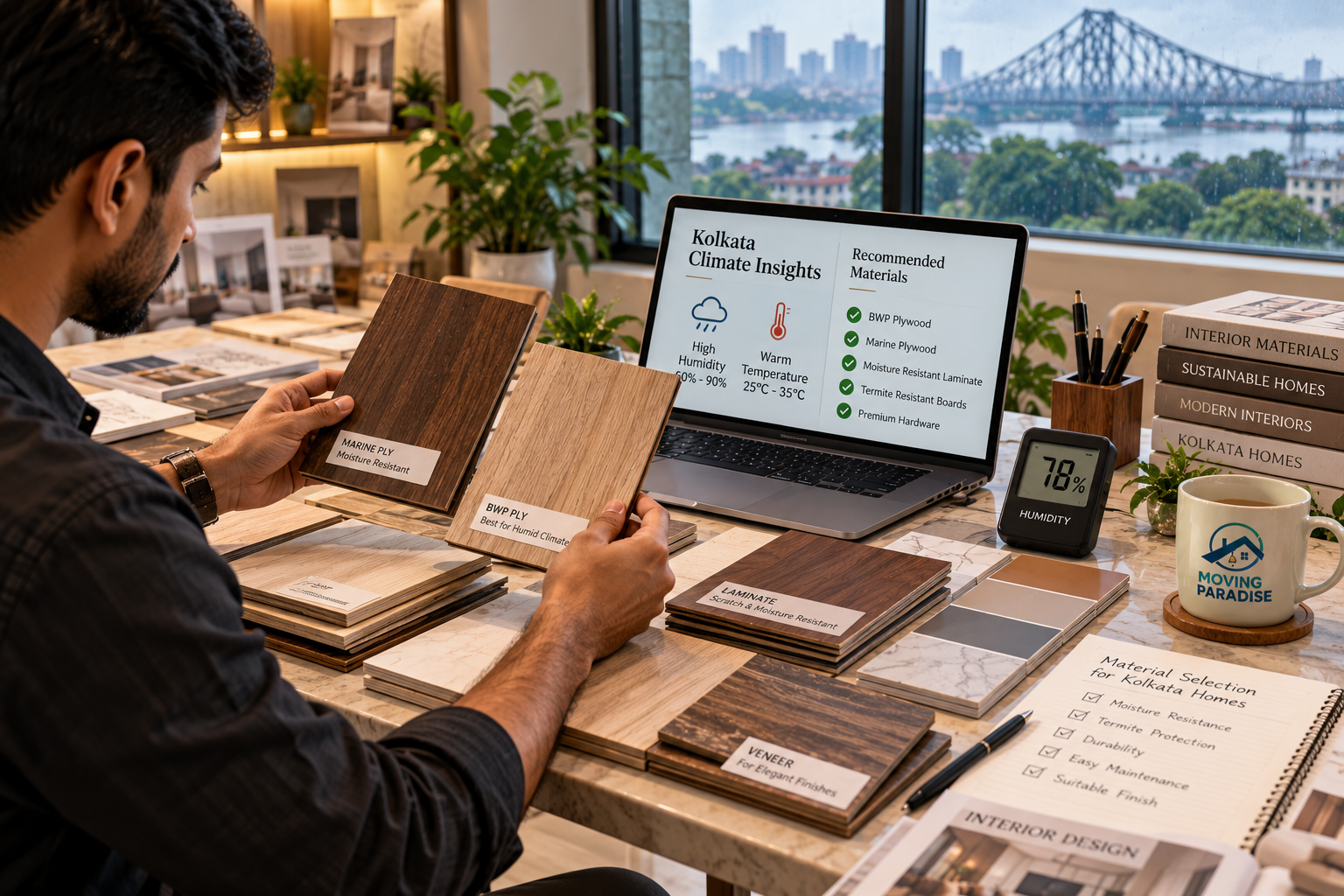
The primary concern in Kolkata is the constant cycle of high humidity followed by intense heat, which acts as a stress test for every piece of furniture in your home. When you ignore these environmental factors, you often find that your investment in premium materials fails prematurely. For instance, selecting solid teak for a kitchen cabinet seems like a luxury choice, but if it isn’t kiln-dried to the correct moisture content, the wood will twist as it reacts to the monsoon air. This movement breaks the seal on your paint or varnish, allowing even more moisture to penetrate the fibers.
Once moisture penetrates the core of a material, it’s rarely a quick fix. You’ll see signs of this distress through peeling paint or “blooming” on polished wood surfaces, where the finish turns cloudy because trapped water can’t escape. If you use metal, the high salt content often found in coastal or humid city air speeds up the rate of oxidation. This turns simple decorative hinges into brittle, rust-covered parts that fail to hold doors securely. It’s a mistake to choose decorative items based only on how they look in a showroom, as these spaces are often climate-controlled and don’t reflect the reality of your living room.
A common error is assuming that high-end finishes provide a total barrier. In reality, if your room lacks cross-ventilation, even the best varnish will trap moisture against the wood, accelerating rot from the inside out. If you notice a faint, sweet smell near your cabinets, the wood is already compromised.
Choosing the wrong material costs you time and money in repairs. If you opt for heavy, thick curtains in a room with poor airflow, they act as a sponge for humidity, leading to a permanent musty smell that’s nearly impossible to remove without professional cleaning.
If your home has a central air conditioning system, you must run it at least four hours daily during the monsoon to stabilize the internal dew point. If you don’t have climate control, prioritize materials like powder-coated aluminum or treated bamboo, which handle moisture cycles better than solid hardwoods.
What you can change, and what you cannot
Things you control
The quality of the sealant used on wooden surfaces.
Placement of furniture away from damp exterior walls.
Use of dehumidifiers in rooms that lack natural airflow.
Choice of synthetic or treated fabrics over natural fibers.
Things fixed by design
The local humidity level during the monsoon months.
The orientation of your building toward the sun.
The inherent porosity of natural stone or timber.
The salt content in the regional air supply.
Getting more out of it
Practical habits help keep your home in good shape despite the weather. First, use a squeegee to remove condensation from windows every morning during the rainy season to keep moisture out of your walls. If you see water pooling on the sill, you must act; ignoring it can lead to mold growth.
Second, leave at least two inches of space between heavy cabinets and exterior walls to allow for air circulation. This gap prevents trapped humidity from rotting your drywall. If you live in a basement or ground-floor unit, increase this gap to four inches to account for higher vapor pressure.
Third, apply a high-quality polyurethane sealant to all wood edges, not just the visible faces. Most people seal only the front, which allows moisture to wick into the raw wood from the back. This mistake causes warping and finish cracking within one season.
Fourth, if you use metal hardware, wipe it with a light coat of mineral oil regularly. This creates a temporary shield against oxidation. If you notice pitting or rust spots, scrub them with a soft nylon brush before applying the oil.
Finally, rotate your cushions and rugs as part of your usual clean. This simple decision rule keeps fabrics dry and prevents the musty odors that signal deep-set mildew.
Frequently asked questions

Can I use solid wood furniture in Kolkata?
Yes, you can use solid wood if it’s properly kiln-dried and finished with a high-quality sealant. Wood is a natural material that breathes, so it will always react to humidity changes to some degree. You should avoid placing solid wood pieces directly against exterior-facing walls where dampness gathers. Check the manufacturer’s documentation for the wood’s moisture content percentage to ensure it’s suitable for tropical climates before you buy.
Why does my paint peel during the monsoon?
Paint peels because moisture gets trapped between the wall surface and the paint layer, causing the bond to break. This often happens if the wall was damp when painted or if there’s a leak nearby. You must strip the loose paint, allow the wall to dry completely for several days, and apply a high-quality moisture-resistant primer before repainting. Check your paint can label for specific instructions on humidity tolerance.
How do I stop my metal hinges from rusting?
You stop rust by keeping metal surfaces clean and applying a thin protective layer of oil or wax. Rust occurs when moisture and oxygen react with the metal, which happens much faster in humid air. Wipe your hinges with a dry cloth whenever you notice it and apply a small amount of machine oil to the moving parts. If the metal is already pitted, you may need to replace it with stainless steel.
Is leather a good choice for my sofa?
Leather is a better choice than heavy fabric because it resists moisture, though it requires regular care to prevent mold. In humid climates, keep leather clean and dry to avoid mildew. Use a leather conditioner specifically made for humid environments. If your room is very damp, a dehumidifier is necessary to keep the leather in good condition.
Does airflow really matter for decoration?
Yes, airflow is the most effective way to prevent moisture buildup and the resulting damage to your interior materials. Stagnant air allows humidity to settle on surfaces, which leads to mold and material decay. You can improve airflow by keeping furniture away from walls, using ceiling fans, and opening windows when the outdoor humidity is lower than the indoor humidity. This simple habit extends the life of your furniture significantly.
What is the best flooring for this climate?
Tile or high-quality laminate are the best choices because they’re non-porous and resist water absorption. Unlike wood, tile doesn’t swell or warp when the humidity rises. If you prefer the look of wood, choose a high-pressure laminate that’s specifically rated for moisture resistance. Check the flooring manufacturer’s technical sheet for the water absorption rate to ensure it meets your needs for a humid environment.
Final Thoughts
Choosing the right materials doesn’t just protect your home; it makes your daily life feel much lighter. As you start planning your next renovation, look for samples that feel cool and firm to the touch. You’ll be glad you prioritized these lasting finishes when the monsoon rains finally roll in.