
The lacquered glass wardrobe cost typically ranges from two thousand to six thousand dollars, depending on the size, internal storage components, and the type of glass finish chosen. If you select a custom-built unit with motorized doors or high-end internal organizers, this price can easily double. This estimate assumes a standard floor-to-ceiling installation in a residential bedroom; for smaller or pre-fabricated models, you might find options starting closer to one thousand dollars.
How often, by how you use it

How you use it | How often | What tells you it’s due |
|---|---|---|
Daily heavy use | Every 6 months | Sticky or uneven sliding |
Moderate daily use | Every 12 months | Visible dust on tracks |
Occasional storage | Every 24 months | Squeaking sounds during use |
Minimal guest use | Every 36 months | Harder to slide doors |
Most owners wait until a door jams completely before cleaning the tracks. This mistake often forces the rollers to flatten under the added friction, requiring a full hardware replacement rather than simple maintenance.
If your door feels heavy or requires two hands to move, the tracks are likely already clogged with debris. You should inspect the rollers immediately. If you hear a grinding noise, stop using the door until you have cleared the track.
Use this decision rule: If the door glides with one finger, clean it on your scheduled date. If you feel resistance, perform the cleaning immediately regardless of the calendar. Neglecting this causes the metal tracks to pit, which makes future sliding permanently rough even after the dust is gone.
What happens if you skip it
Neglecting to maintain your wardrobe leads to mechanical failure that starts with simple friction. In the first few months, accumulated dust and hair in the bottom tracks create resistance. You’ll notice that the doors require more force to slide, which puts unnecessary stress on the rollers. The rollers are designed to handle specific weights, and when they must fight against debris, the internal bearings begin to wear down prematurely.
After six to twelve months of skipped cleaning, the debris packs into the corners of the track. This prevents the door from sitting flush, which can cause the soft-close mechanisms to stop engaging. If your wardrobe uses glass panels, the extra force you apply to move a stuck door risks putting stress on the frame, which can lead to hairline fractures or the glass detaching from its adhesive backing.
Eventually, the entire sliding mechanism will fail. If you continue to force the doors, the bottom guide will likely snap, which risks the heavy glass panel falling out of the track. Fixing a broken track or replacing a shattered glass panel is significantly more expensive than regular cleaning. If you’re unsure about the weight capacity or the specific maintenance requirements for your hardware, check the manufacturer’s label located inside the side panel or on the back of the door frame.
The signs it’s overdue
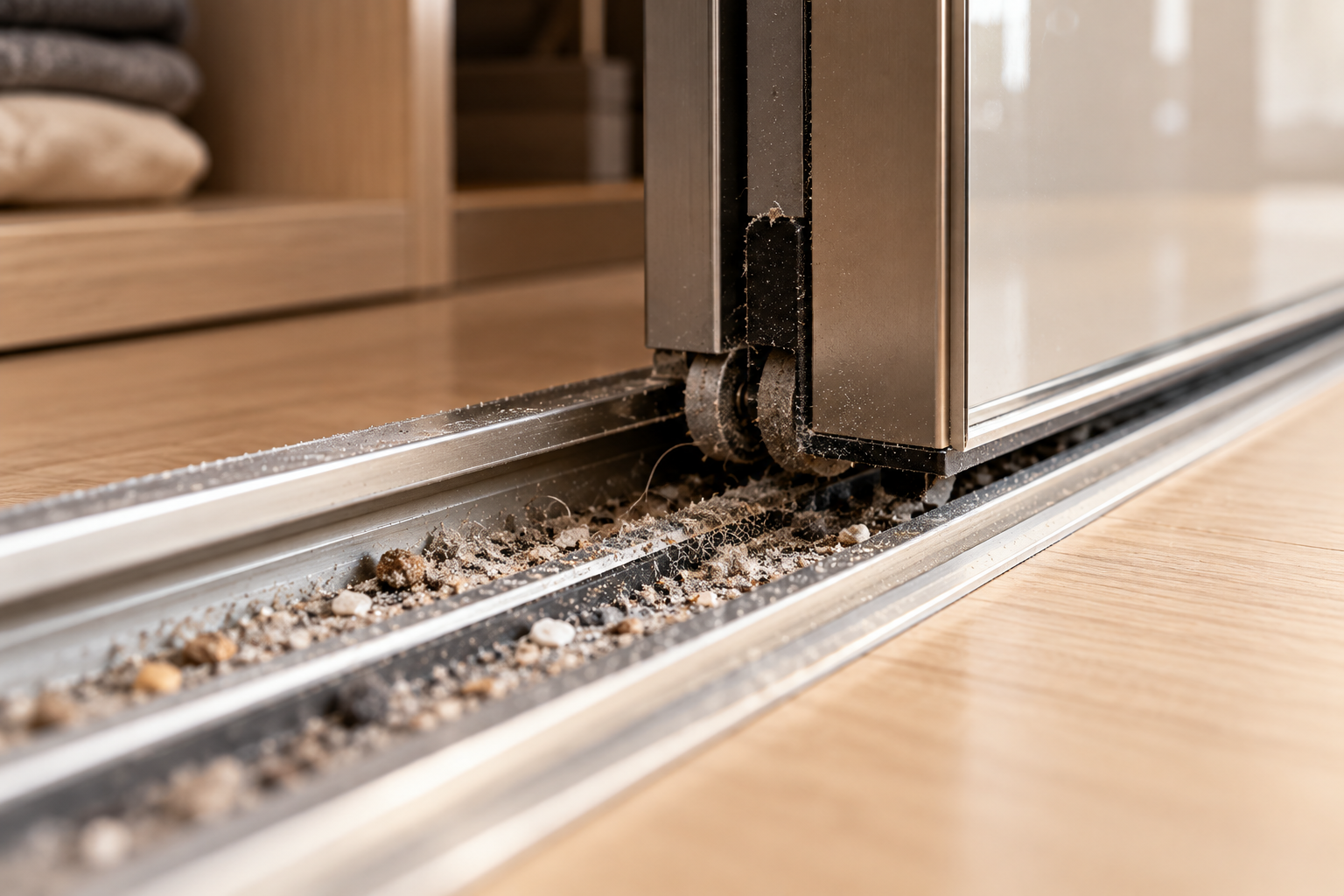
Grinding noise: You hear a metallic scraping sound when you move the door, meaning debris is trapped in the track.
Door bounce: The door doesn’t stay closed and bounces back open, indicating a failed soft-close damper.
Visible track debris: You see a thick layer of dust or lint inside the channel, which blocks the roller path.
Uneven gaps: The space between the doors is wider at the top than the bottom, meaning the rollers have slipped.
Resistance: You feel a physical “hump” or stop point when moving the door, signaling a damaged track or wheel.
Sticking: The door feels heavy to move, which forces you to pull harder and increases the risk of frame damage.
What it takes each time
Performing maintenance on a lacquered glass wardrobe takes about thirty minutes and requires only basic supplies found at home. You’ll need a vacuum with a brush attachment, a microfiber cloth, and a mild glass cleaner. Before starting, ensure the area is clear of loose items that could fall if the doors are shifted.
First, vacuum the bottom track thoroughly to remove all dust, hair, and grit. This step is critical because any remaining debris acts like sandpaper against the rollers. Once the track is clear, wipe it down with a damp cloth to remove fine dust. If your wardrobe has a top guide, wipe that clean as well. Next, inspect the rollers. If they’re adjustable, you may need a screwdriver to tighten the adjustment screw if the door is sagging. Check the manufacturer’s manual for your specific model to identify the adjustment point, as some require a flat-head driver while others use a hex key.
Finally, clean the glass surfaces using a lint-free cloth. Because lacquered glass can show streaks, use a non-abrasive cleaner. Avoid using harsh chemicals or scouring pads, as these can scratch the lacquer finish or degrade the edge seals. If you find the rollers are completely seized or the track is bent, stop immediately; this is a job for a professional furniture installer.
How to go longer between times
Vacuum weekly: Use a brush attachment on the tracks to prevent the buildup that causes rollers to jam. If you hear a grinding noise, stop immediately; debris has likely already embedded into the nylon wheels.
Avoid heavy impact: Don’t slam the glass doors. The force damages soft-close dampers and can crack the glass. If a door bounces back when closed, the damper is likely blown and requires a replacement part to prevent the frame from warping.
Check alignment: Periodically look at the gap between the doors. If it’s uneven, adjust the rollers before the weight ruins the track. A gap wider than 1/8 inch at the top indicates the door is sagging, which puts excessive stress on the bottom hardware.
Keep floor clean: Since the bottom track is low, keeping the surrounding floor free of hair and debris stops it from entering. If you see dust clumping, wipe the track with a dry microfiber cloth to prevent debris buildup.
Frequently asked questions

Can I install a lacquered glass wardrobe myself?
No, it isn’t recommended for most homeowners. These units are extremely heavy and require precise leveling for the sliding mechanisms to function correctly. If the frame isn’t perfectly square, the glass panels will bind or eventually shatter under the uneven pressure. Professional installers have the tools to ensure the track is aligned to within one millimeter, which is essential for the longevity of the rollers and the safety of the glass.
Why is the cost of lacquered glass higher than wood?
The price is higher because of the manufacturing process and the safety requirements of the material. Lacquered glass must be tempered to prevent dangerous breakage, which adds significant production costs compared to standard wood panels. Additionally, the lacquered finish requires a multi-step application and curing process in a dust-free environment to achieve a high-gloss, durable surface that doesn’t peel or discolor over time.
How long does the lacquer finish last?
The finish can last for twenty years or more if it’s kept away from direct, high-intensity sunlight and cleaned with non-abrasive products. Lacquer is a durable, hardened coating, but it can fade or yellow if exposed to extreme UV light. You can check the specific care instructions provided by the manufacturer in the warranty document to see if they recommend a specific protective wax or cleaner for your finish.
Is it safe to have glass wardrobes with children?
Yes, it’s safe provided the glass is tempered and the installation is secure. All modern high-quality glass wardrobes use tempered safety glass, which shatters into small, blunt pieces rather than sharp shards if broken. However, you must ensure the unit is anchored to the wall to prevent tipping. Check the manufacturer’s documentation for the specific anchoring method required for your wall type to ensure the unit remains stable.
Does the door weight affect the track life?
Yes, the weight of the glass directly impacts how fast the rollers wear down. Because lacquered glass is much heavier than wood or mirrored doors, the rollers are under constant high pressure. If the track isn’t kept clean, the increased friction causes the bearings inside the rollers to fail much faster. Always verify the maximum weight capacity of your hardware system if you’re choosing thick, oversized glass panels.
What happens if the lacquer gets scratched?
Small, light scratches can sometimes be buffed out with specialized glass polish, but deep gouges are usually permanent. Because the lacquer is applied to the back of the glass, the front surface is actually the glass itself, which is quite hard. However, if the scratch penetrates the lacquer layer on the back, it will be visible from the front. Avoid using any metallic tools or abrasive scrubbers near the glass surface.
What to do next
Start by vacuuming the tracks of your wardrobe to remove the dust that causes mechanical resistance. Use a crevice tool to reach the corners where grit accumulates most heavily. You should see the doors slide smoothly and silently once the debris is cleared and the rollers are free to move.
If you notice a door is still stuck or the soft-close feature doesn’t engage after cleaning, stop using the unit immediately. Forcing a misaligned door often snaps the plastic housing of the roller assembly, turning a simple adjustment into a costly component replacement.
Contact the manufacturer’s support team or a professional furniture technician to prevent further damage to the frame or the glass. If the door hangs unevenly, check the floor level first; if the floor has settled, the frame requires shimming rather than mechanical repair.